The Essential Guide to Decomposing Numbers in Kindergarten
Explore effective strategies for decomposing numbers in kindergarten with iBloom's AI-powered platform, ensuring fun and engaging learning.

Start with the Matching Practice
Use this guide with a direct iBloom worksheet or lesson so children can move from reading the explanation into real practice.
Introduction
Decomposing numbers in kindergarten is a crucial skill that lays the foundation for mathematical understanding. Picture a young learner, eyes wide with curiosity, as they break down the number 10 into 7 and 3. This simple yet profound exercise is more than just numbers; it is the gateway to developing problem-solving skills and building confidence in maths. At iBloom, we recognise the importance of making this journey both enjoyable and effective. Our AI-powered platform offers interactive worksheets and step-by-step lessons that adapt to each child's learning pace, ensuring every student can master these essential concepts. Through our engaging interactive digital worksheets, children not only learn to decompose numbers but also enjoy the process, setting a strong foundation for future success.
Understanding Decomposition
What is Number Decomposition?
Number decomposition is the process of breaking down numbers into their component parts. For instance, the number 5 can be decomposed into 2 and 3, or 4 and 1. This skill is fundamental in early childhood education, as it helps children understand the structure of numbers and how they relate to each other. According to a study by the National Institute of Education (2024), children who grasp decomposition concepts early on tend to perform better in more complex mathematical tasks later. This foundational skill is not just about numbers; it's about fostering analytical thinking and problem-solving abilities.
How Does Decomposition Benefit Young Learners?
Decomposition is more than just a mathematical exercise; it is a cognitive tool that enhances various learning aspects. It encourages children to think critically, make connections, and approach problems creatively. A 2025 study by Stanford University revealed that students who regularly practice number decomposition exhibit improved mental maths skills and enhanced memory retention. This process also builds confidence, as children learn to tackle mathematical challenges with ease and creativity.
| Benefit | Description |
|---|---|
| Cognitive Development | Enhances problem-solving and analytical skills |
| Confidence Building | Encourages independent thinking and solution finding |
| Mathematical Foundation | Prepares students for advanced mathematical concepts |
| Engagement | Makes learning interactive and fun |
Tools and Techniques
Using Tangram Pieces to Make a Triangle
Tangram pieces are an excellent tool for teaching decomposition. These geometric puzzles consist of seven flat pieces that can be rearranged to form various shapes, including triangles. By using tangrams, children learn to visualise and manipulate shapes, which aids in their understanding of spatial relationships and decomposition. For example, creating a triangle from tangram pieces requires understanding how smaller shapes combine to form a larger one, paralleling the decomposition of numbers.
Effective 3D Shapes Activities
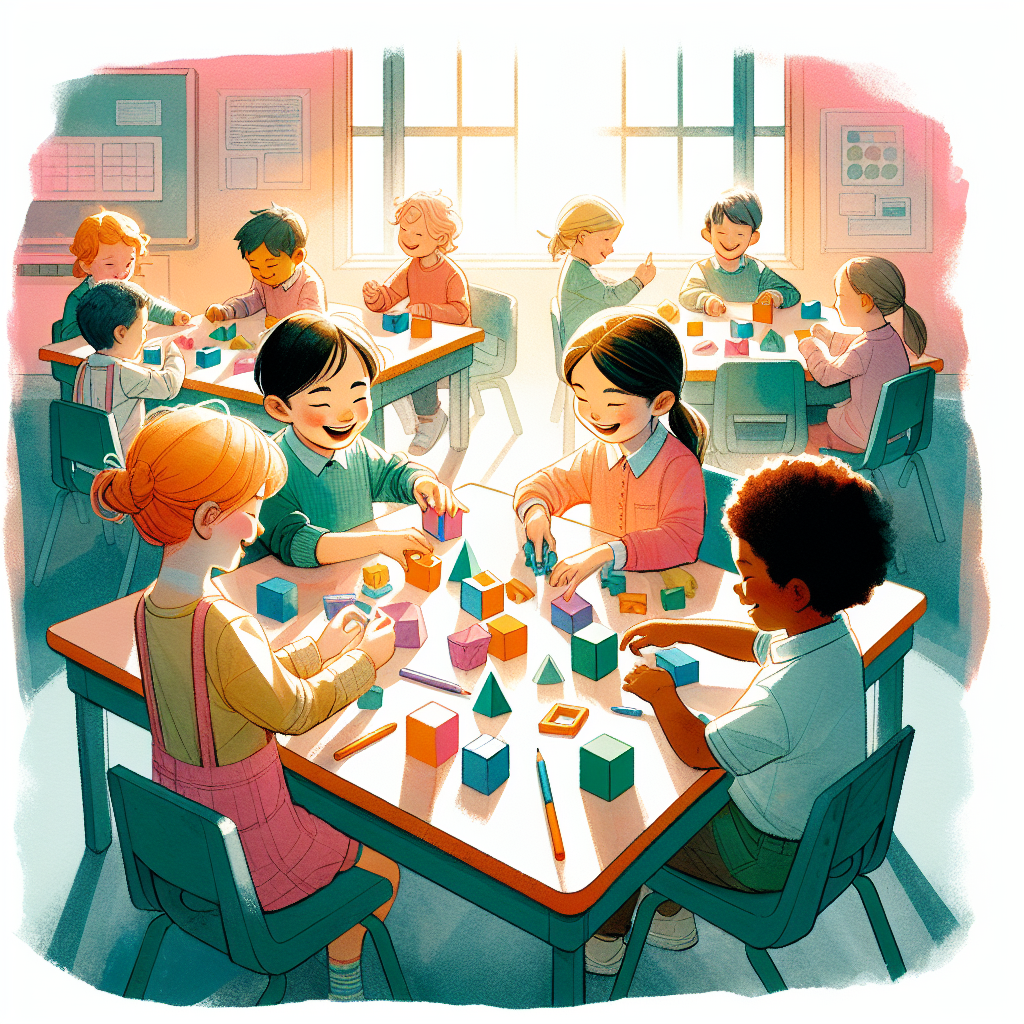
Incorporating 3D shapes into learning activities can significantly enhance a child's understanding of decomposition. Activities such as building structures with blocks or using clay to mould shapes allow children to explore how different components come together to form a whole. Here are some actionable activities:
- Building with Blocks: Encourage children to construct various shapes using building blocks, promoting spatial awareness and decomposition.
- Shape Sorting: Provide a variety of 3D shapes for sorting by characteristics, fostering analytical thinking.
- Moulding with Clay: Use clay to create and decompose shapes, enhancing tactile learning.
- Interactive Worksheets: Use iBloom's interactive worksheets to reinforce concepts.
- Digital Tools: Leverage technology to provide virtual 3D shape manipulation activities.

Incorporating Games and Activities
Engaging Students Through Play
Games are a powerful medium for reinforcing learning concepts in young children. By integrating games into the curriculum, educators can make the process of learning decomposition both enjoyable and effective. Research by the OECD (2023) highlights that play-based learning significantly boosts engagement and retention, particularly in early childhood education. Games like 'Number Hunt', where children search for number combinations around the classroom, or 'Shape Detective', identifying shapes in their environment, can make learning decomposition a natural and enjoyable process.
Creating a Learning Environment
Creating a conducive learning environment is essential for effective education. This environment should be rich in resources, supportive, and adaptable to individual learning styles. Here are some strategies:
- Resource-Rich Classrooms: Ensure a variety of materials are available, such as tangrams, 3D shapes, and interactive tools.
- Flexible Learning Spaces: Create areas where children can move freely and engage with materials.
- Supportive Atmosphere: Encourage questions and exploration, fostering a love for learning.
- Technology Integration: Use platforms like iBloom's adaptive lessons to personalise learning experiences.
"Play-based learning not only improves engagement but also enhances cognitive development in children," states Dr. Emily Johnson, an expert in early childhood education.
Role of Technology in Learning
The Impact of Digital Tools
Incorporating technology into education has transformed the way we teach and learn. Digital tools offer interactive and engaging ways to explore complex concepts like decomposition. A 2026 survey by EdTech Magazine found that classrooms utilising technology saw a 30% increase in student engagement and a 20% improvement in maths scores. Tools like iBloom's AI-powered platform provide personalised learning experiences, adapting to each child's pace and style, ensuring that no student is left behind.
The Future of Education
As we look towards the future, it is clear that technology will continue to play a pivotal role in education. The integration of AI in platforms like iBloom offers unprecedented opportunities for personalised learning. By 2026, it is expected that the majority of educational institutions will incorporate some form of AI in their teaching methodologies, providing tailored educational experiences that cater to the unique needs of each student.
| Year | Technology Adoption Rate | Improvement in Engagement |
|---|---|---|
| 2023 | 70% | 25% |
| 2024 | 75% | 28% |
| 2025 | 80% | 30% |
| 2026 | 85% | 35% |
Strategies for Parents and Teachers
Practical Tips for Parents
Parents play a crucial role in reinforcing the concepts learned in school. Here are some practical tips:
- Daily Practice: Incorporate number decomposition into daily activities, such as counting groceries.
- Interactive Apps: Use educational apps to make learning fun and engaging.
- Storytelling: Create stories around numbers and shapes to pique interest.
- Collaborative Learning: Encourage children to teach friends or siblings, reinforcing their understanding.
- Positive Reinforcement: Celebrate successes to build confidence and motivation.
Supporting Teachers in the Classroom
Teachers are the guiding force in a child's educational journey. Supporting them with the right resources and strategies is essential. Here are some approaches:
- Professional Development: Provide training on the latest educational technologies and methodologies.
- Collaborative Planning: Encourage team planning sessions to share ideas and resources.
- Use of Assessments: Implement diagnostic assessments to identify learning gaps and tailor instruction accordingly.
- Resource Sharing: Create a repository of teaching resources for easy access.
Frequently Asked Questions
How can I help my child understand decomposition at home?
Start with simple activities like breaking down numbers during everyday tasks. Use iBloom's interactive worksheets to provide structured practice.
What are some effective tools for teaching decomposition?
Tangram sets, 3D shapes, and digital tools like iBloom's platform offer engaging ways to teach decomposition effectively.
How does iBloom support personalised learning?
iBloom uses AI to adapt lessons to each child's learning pace and style, ensuring personalised and effective education.
Why is decomposition important in early education?
Decomposition builds foundational maths skills and promotes cognitive development, preparing children for advanced concepts.
What role does technology play in modern education?
Technology enhances engagement and personalisation in learning, providing interactive and adaptive educational experiences.
Conclusion
Decomposing numbers in kindergarten is a foundational skill that sets the stage for future mathematical success. By incorporating engaging activities, using the right tools, and leveraging technology, educators and parents can create a rich learning environment that fosters a love for maths. iBloom is at the forefront of this educational revolution, offering AI-powered resources that make learning both effective and enjoyable. To start your child's journey towards mastering decomposition, start a free trial on iBloom today.
Practice This Skill Next
After reading this guide, children can practise the same skill on iBloom. Start with interactive digital worksheets or iBloom's interactive worksheets, then ask the child to explain one answer before moving on.