Free printable practice
Vocabulary Antonyms Practice Activities
Printable preschool and kindergarten antonym activities help children connect opposite words such as big/small, hot/cold, and happy/sad.
Free printable worksheet PDFs
Preview every available page, then download the free worksheet PDF for home, homeschool, tutoring, or classroom practice.
Preview the exact activity before downloading it.
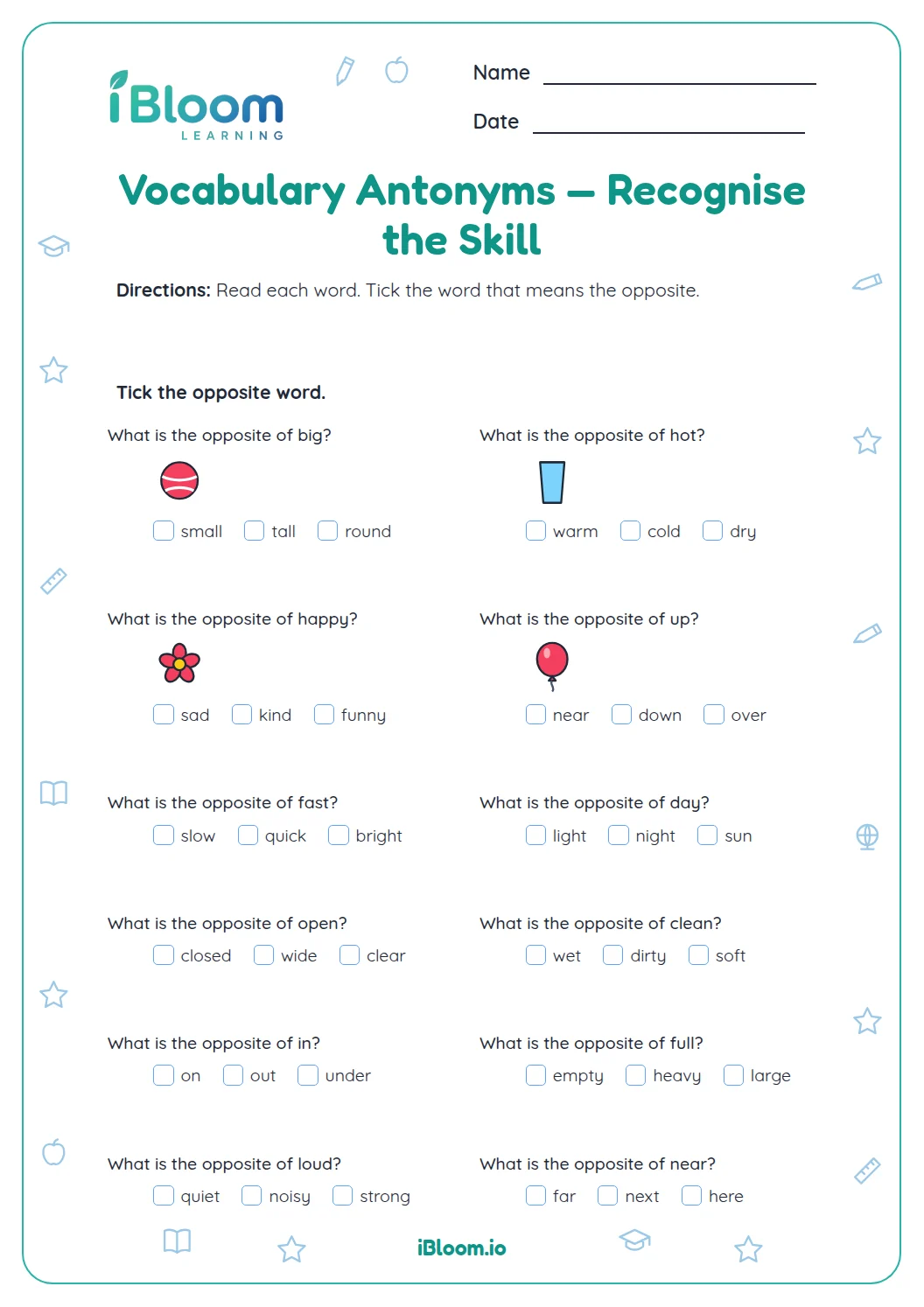 Vocabulary Antonyms — Recognise the SkillRecognise the Skill for vocabulary antonyms in KG1. Choose the word that means the opposite of each familiar word.KG1Free PDF preview
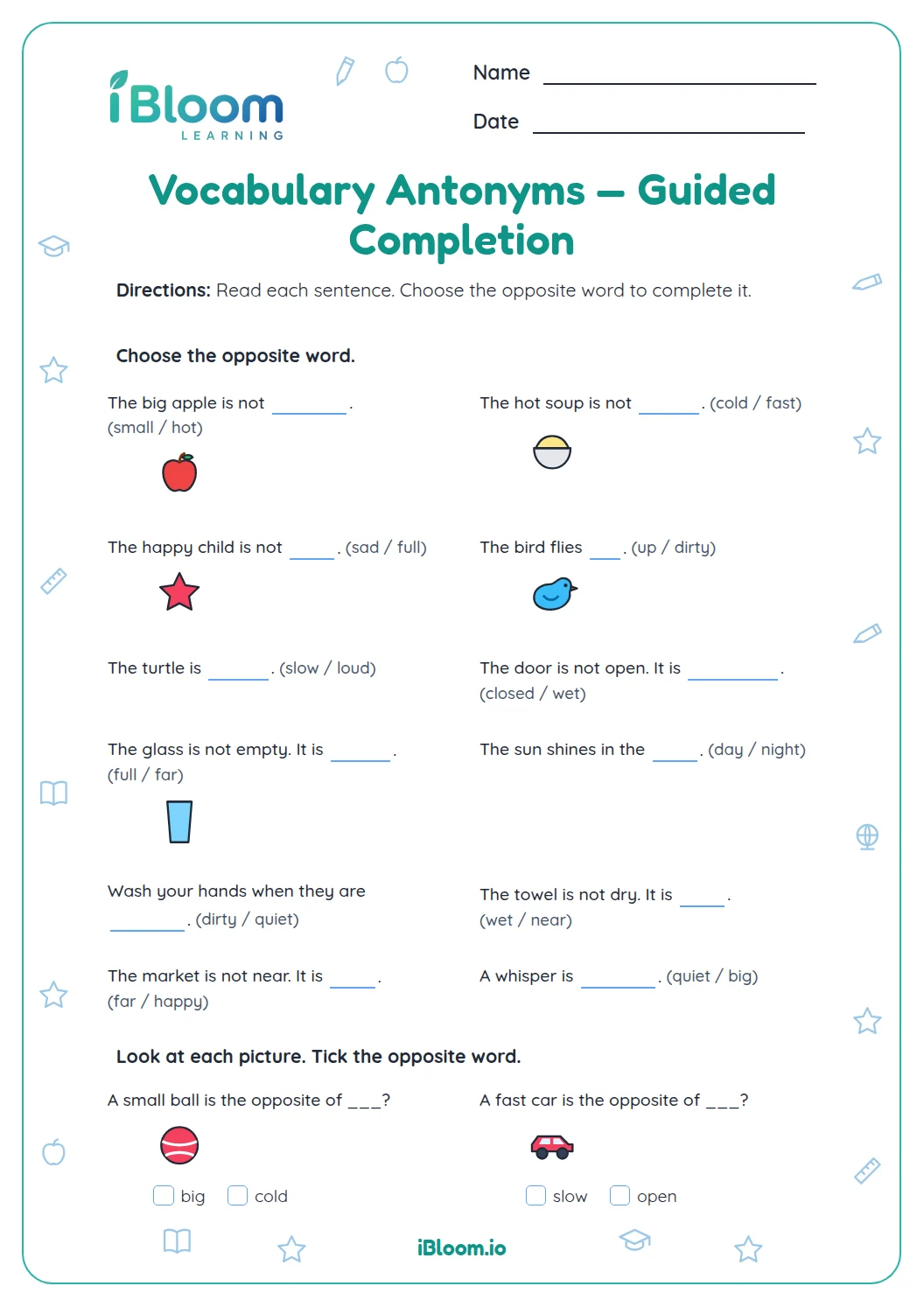 Vocabulary Antonyms — Guided CompletionGuided Completion for vocabulary antonyms in KG1. Children complete short sentences by choosing the opposite word from two guided options.KG1Free PDF preview
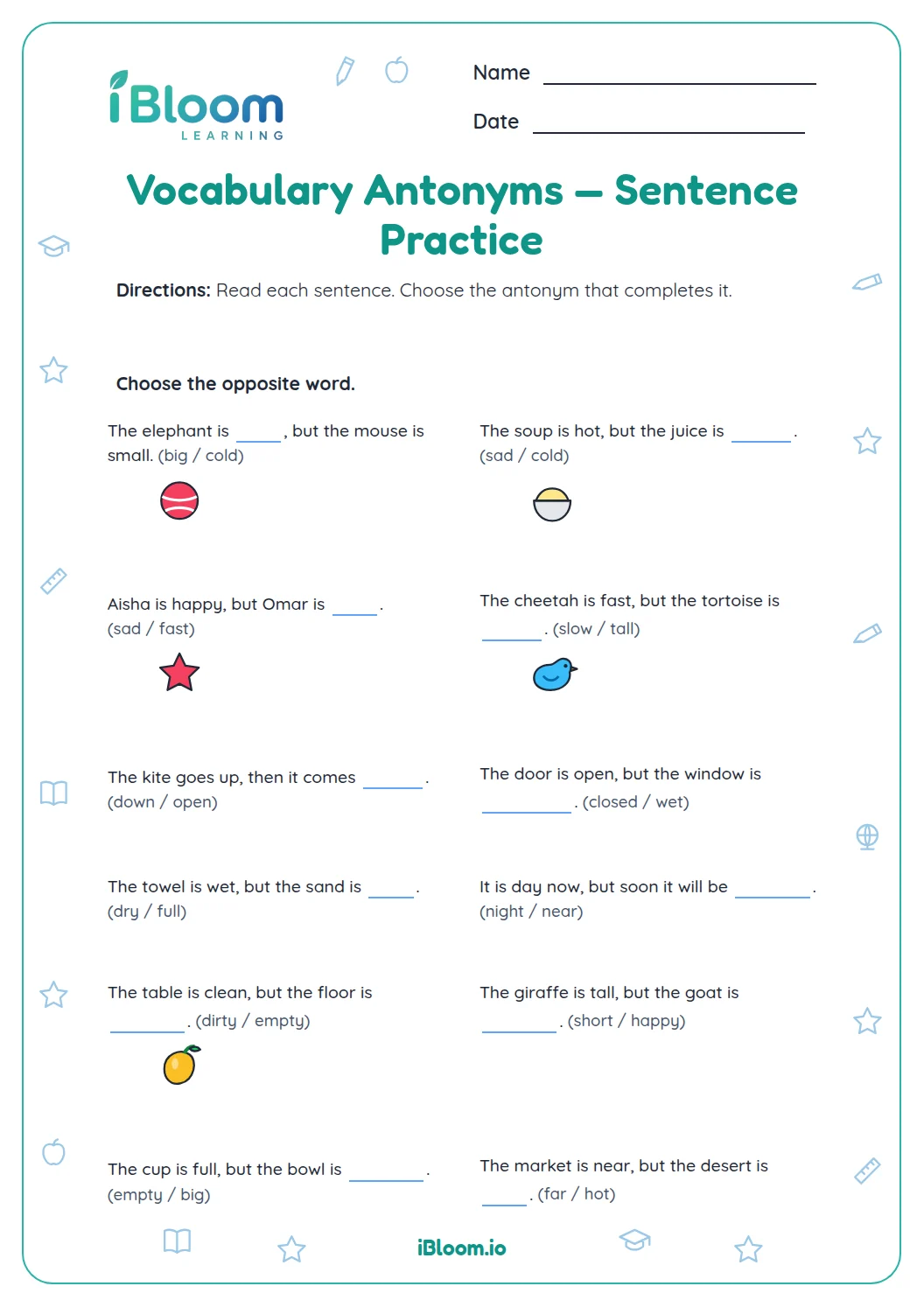 Vocabulary Antonyms — Sentence PracticeSentence Practice for vocabulary antonyms in KG1. Read each short sentence and choose the antonym that makes it complete.KG1Free PDF preview
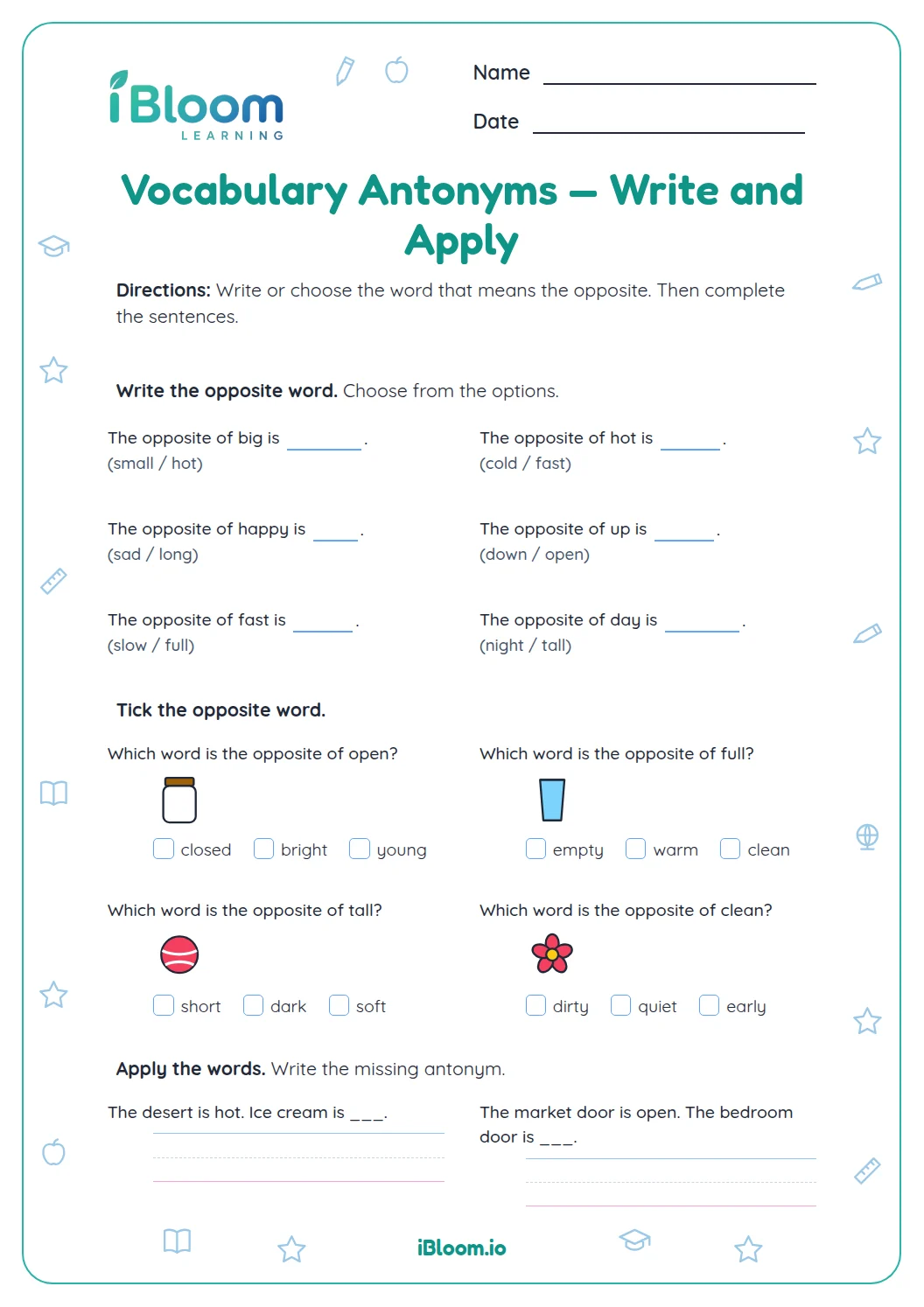 Vocabulary Antonyms — Write and ApplyWrite and Apply for vocabulary antonyms in KG1. Write the opposite word, choose matching antonyms, then use two pairs in short sentences.KG1Free PDF preview
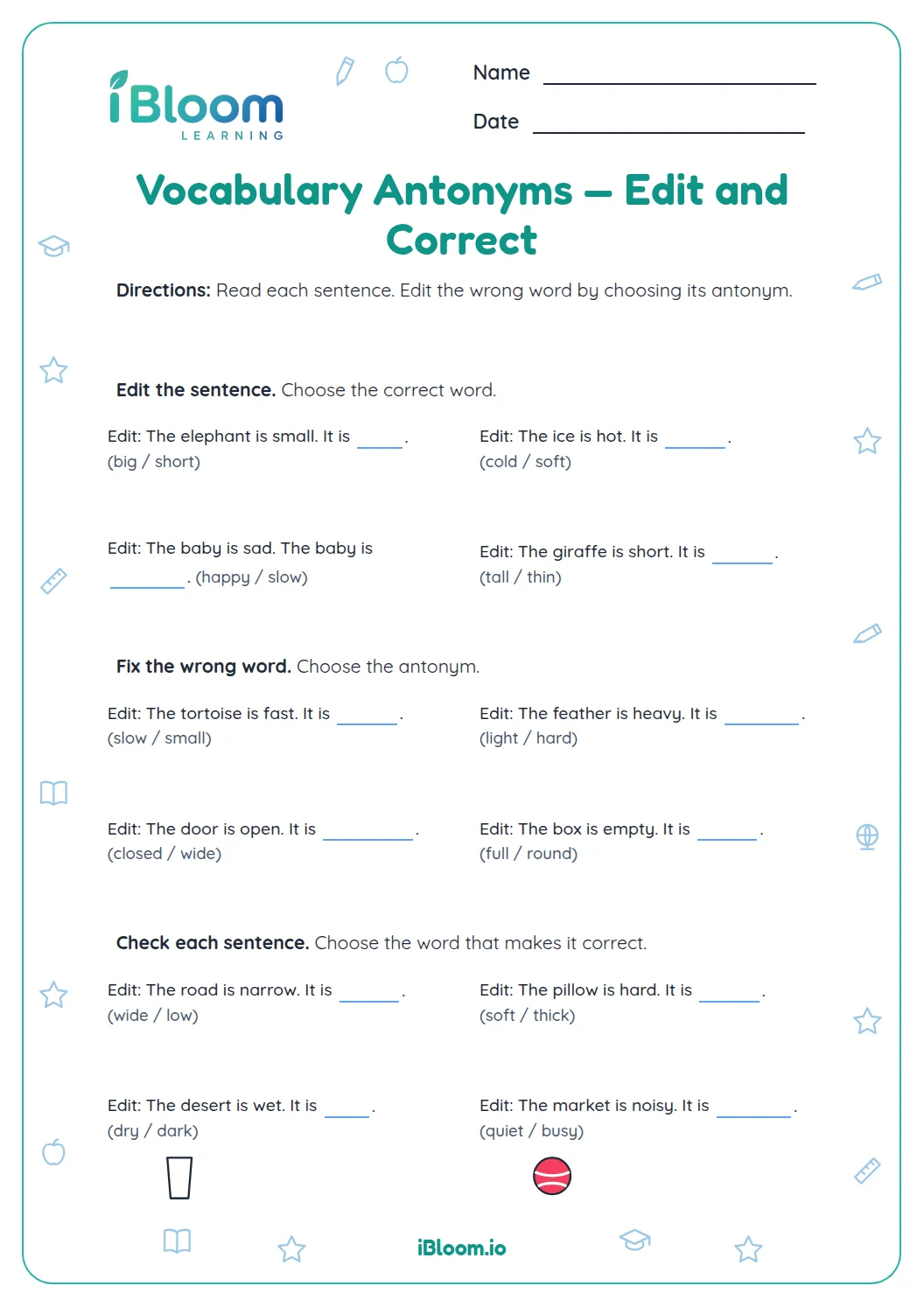 Vocabulary Antonyms — Edit and CorrectEdit and Correct for vocabulary antonyms in KG1. Read each incorrect sentence and choose the antonym that corrects it.KG1Free PDF preview
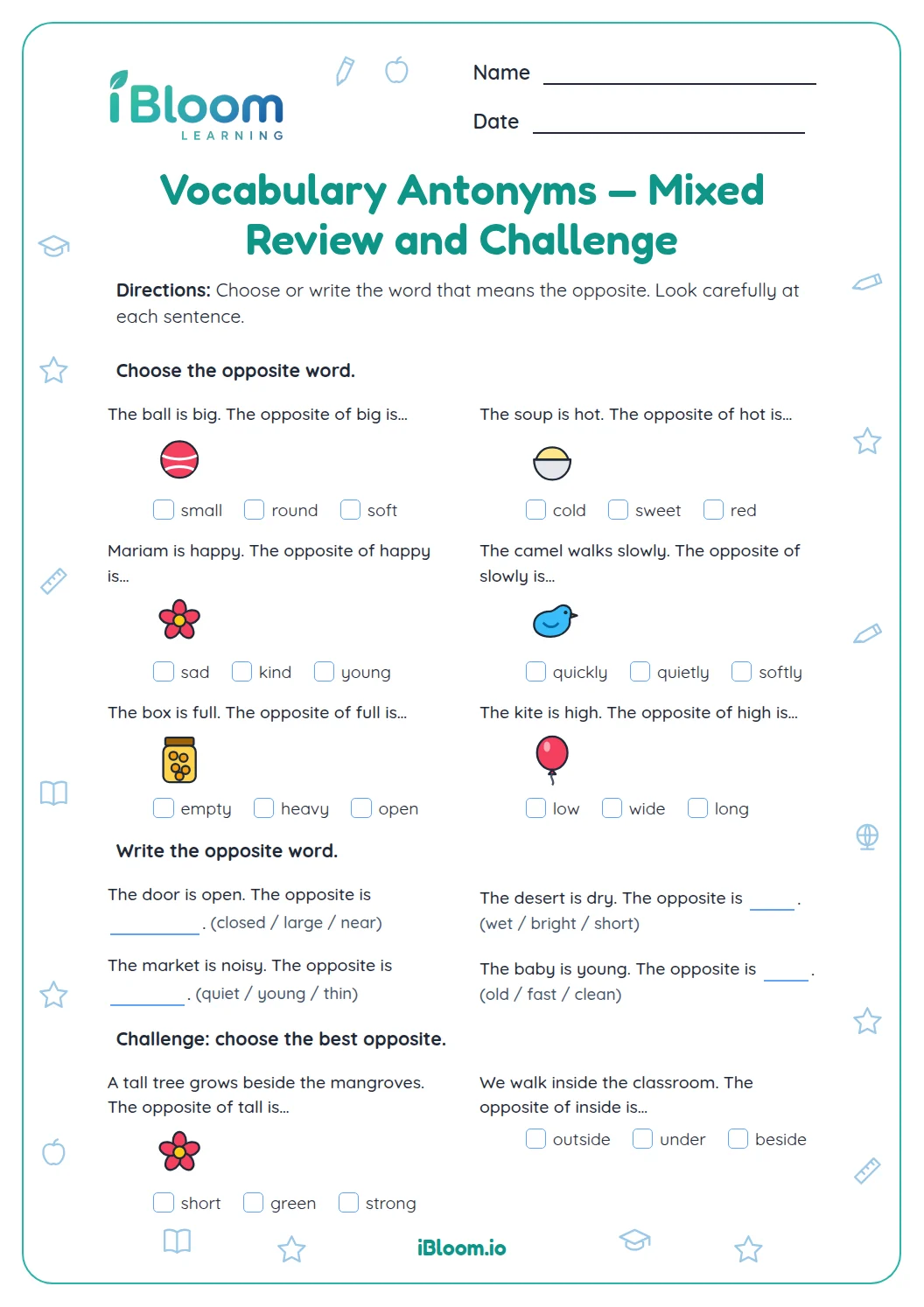 Vocabulary Antonyms — Mixed Review and ChallengeMixed Review and Challenge for vocabulary antonyms in KG1. Choose or write the opposite word for familiar action, describing, size, temperature, and feeling words.KG1Free PDF preview
Practice that builds confidence
Practise Vocabulary Antonyms
Printable preschool and kindergarten antonym activities help children connect opposite words such as big/small, hot/cold, and happy/sad.
Printable preschool and kindergarten antonym activities help children connect opposite words such as big/small, hot/cold, and happy/sad.
Explore printable vocabulary antonyms worksheets for UAE learners. Choose a focused activity that suits the child's stage, model the first example together, and discuss how the child found the answer.

Using a worksheet well
Begin with a short explanation and one worked example. Let the child complete a manageable section, then ask them to explain their answer or show another method. For younger learners, pair the page with real objects, pictures, talk and play. If an item is difficult, return to the prerequisite skill and try again later.
Helpful answers
Frequently asked questions
How should I use these worksheets?
Choose a page that matches the current skill, model one example, and discuss the answers together.
Can I print a worksheet?
Yes. Open a published activity to preview its full printable page before printing.