Free PDF download
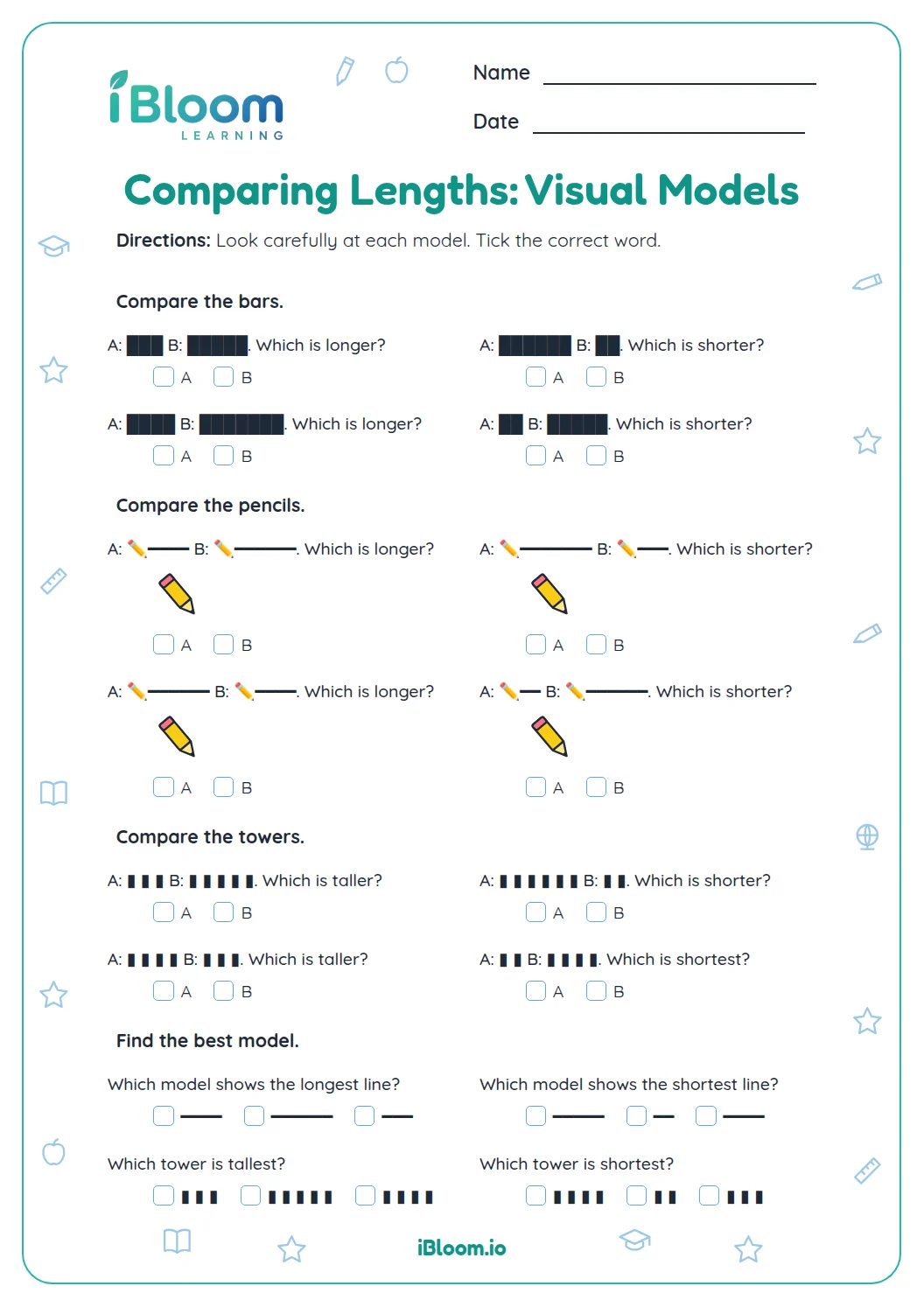
Preview every page of the Comparing Lengths — Visual Models worksheet, then download the printable PDF free for homework, tutoring, homeschool, or classroom practice.
Grade 1 Comparing Lengths printable practice
Visual Models for comparing lengths in Grade 1. Look at visual length models, then choose longer, shorter, tallest, or shortest.
Download and curriculum guide
Preview every page of the Comparing Lengths — Visual Models worksheet, then download the printable PDF free for homework, tutoring, homeschool, or classroom practice.
Use the grade label and learning objective above to compare this worksheet with your school or district scope and sequence.
This free worksheet PDF is available to families and educators across the UAE. Compare the activity with your school's curriculum and current grade expectations before assigning it.
Curriculum codes identify useful skill references; they do not mean that every state, district, or board has formally approved this worksheet.
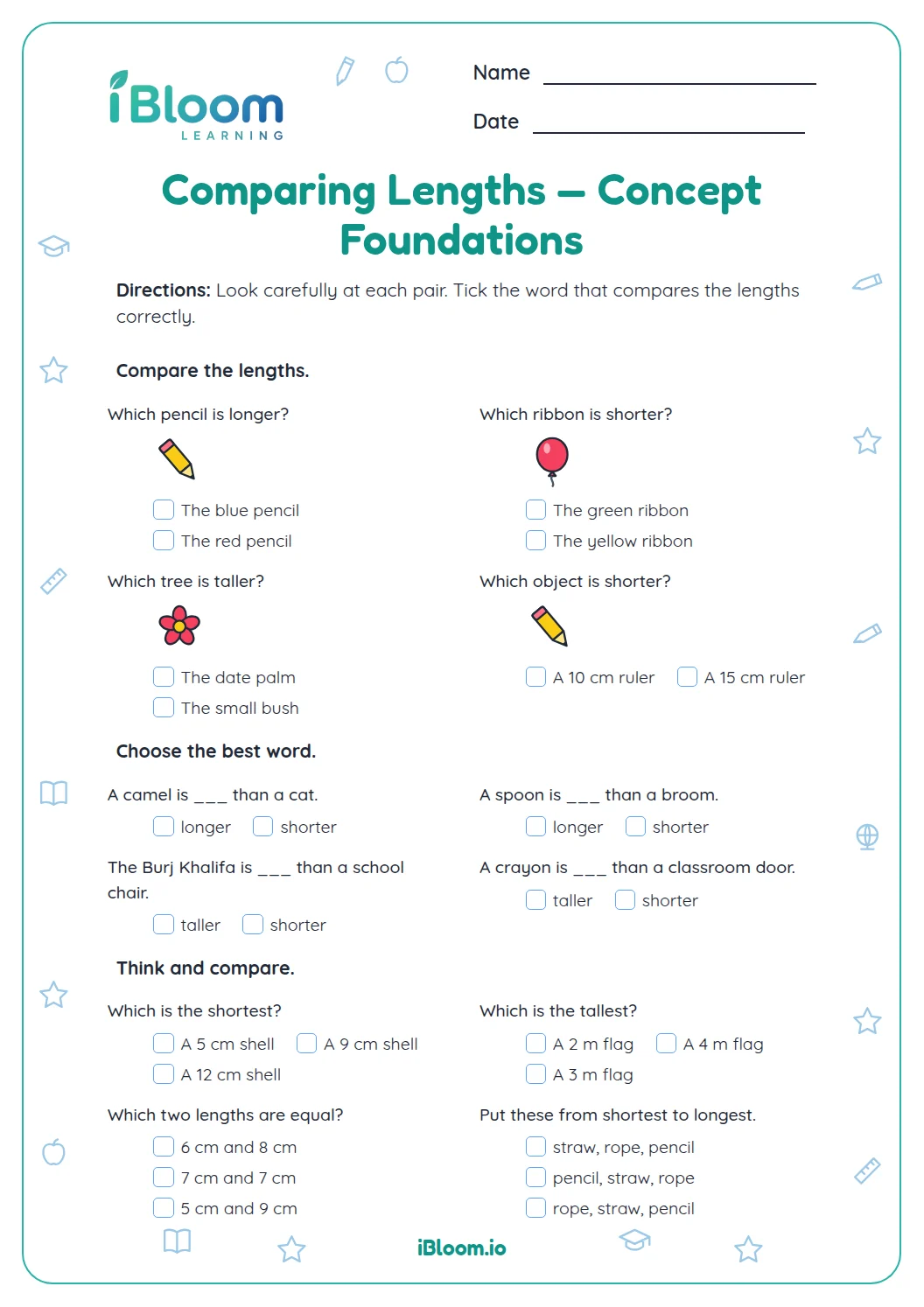
Concept Foundations for comparing lengths in Grade 1. Choose the correct comparison word for each pair of objects and order objects from shortest to longest.
Preview free PDF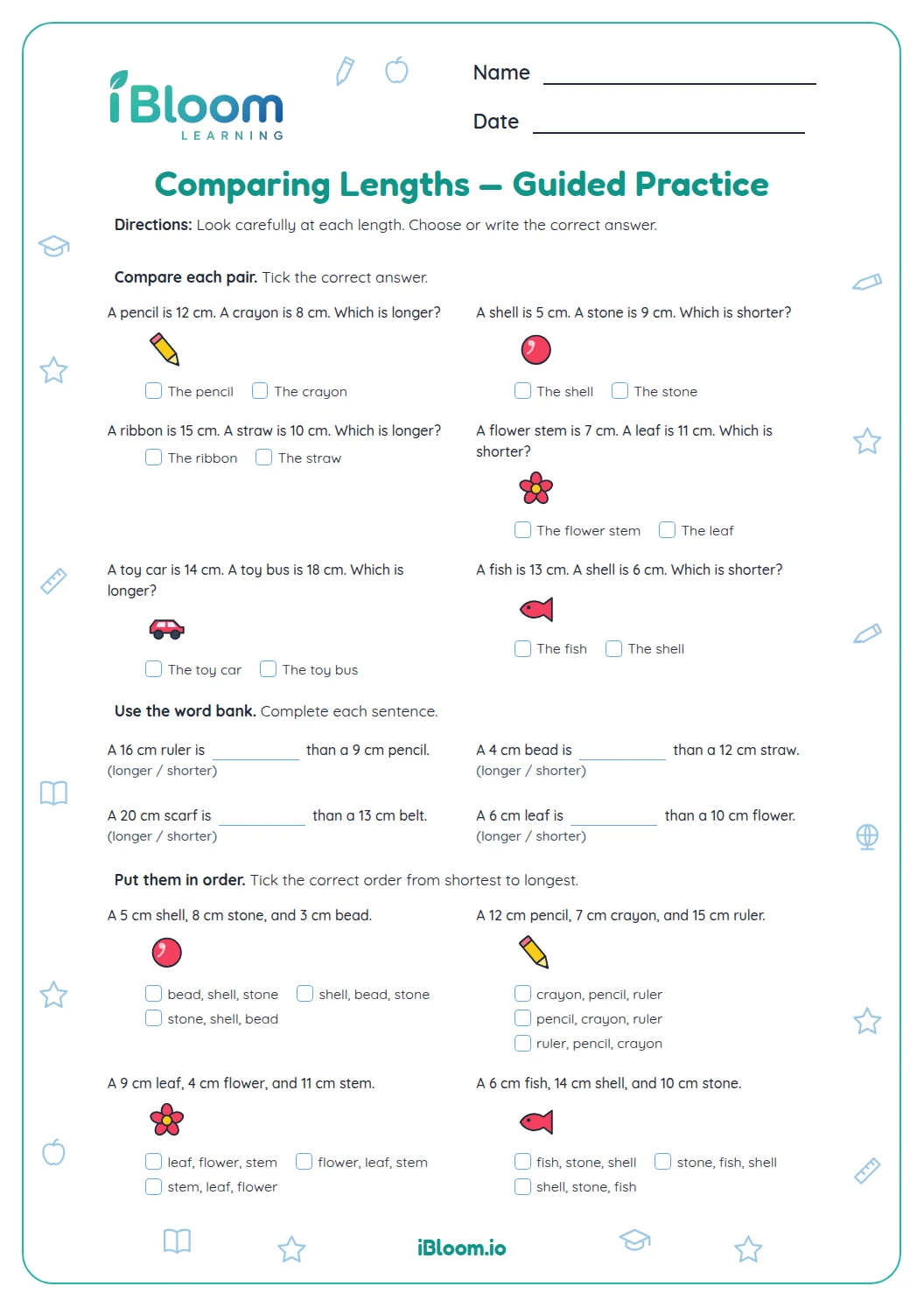
Guided Practice for comparing lengths in Grade 1. Compare pairs of lengths, choose longer or shorter words, then order three objects from shortest to longest.
Preview free PDF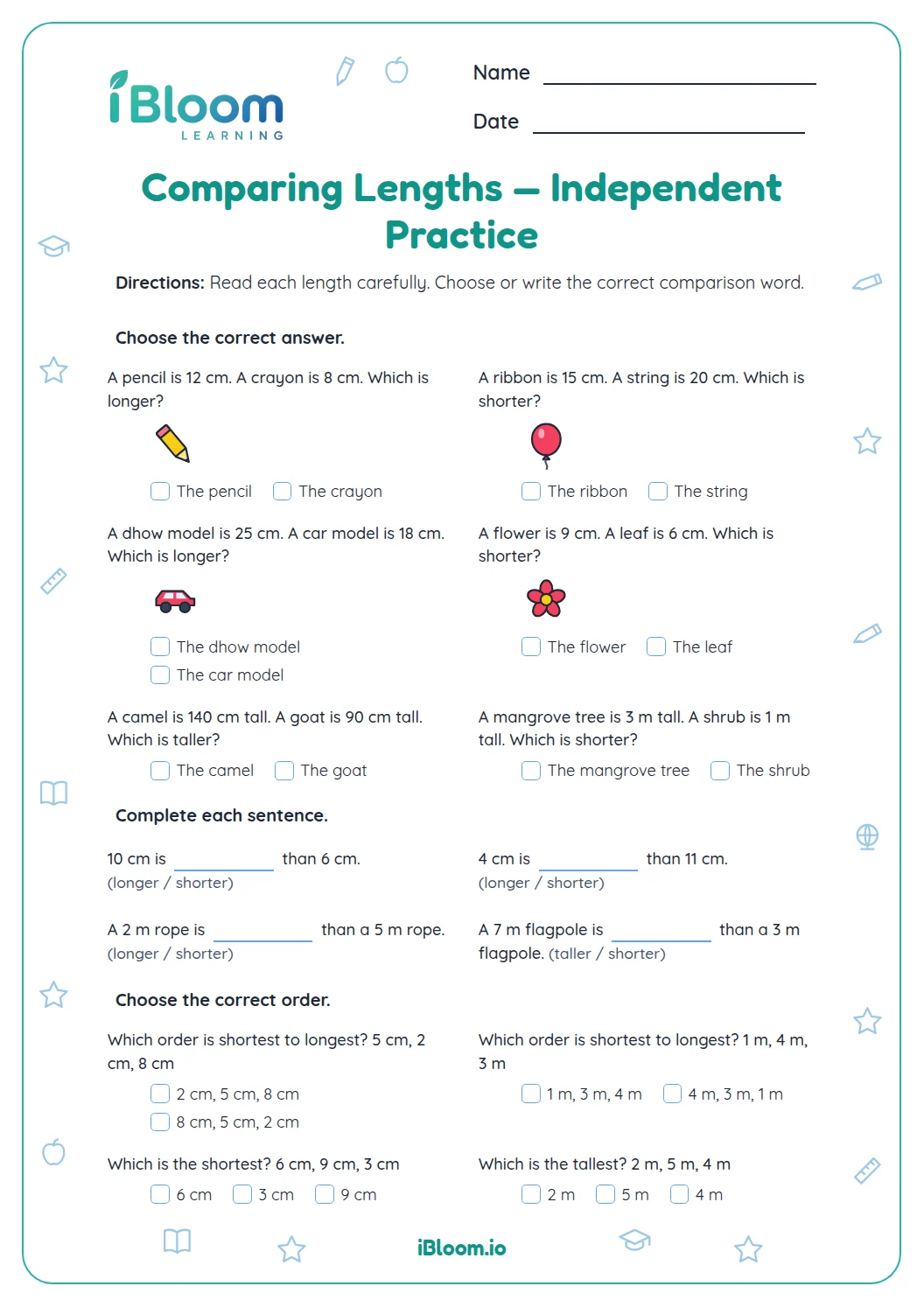
Independent Practice for comparing lengths in Grade 1. Compare given lengths, choose longer or shorter objects, and order lengths from shortest to longest.
Preview free PDF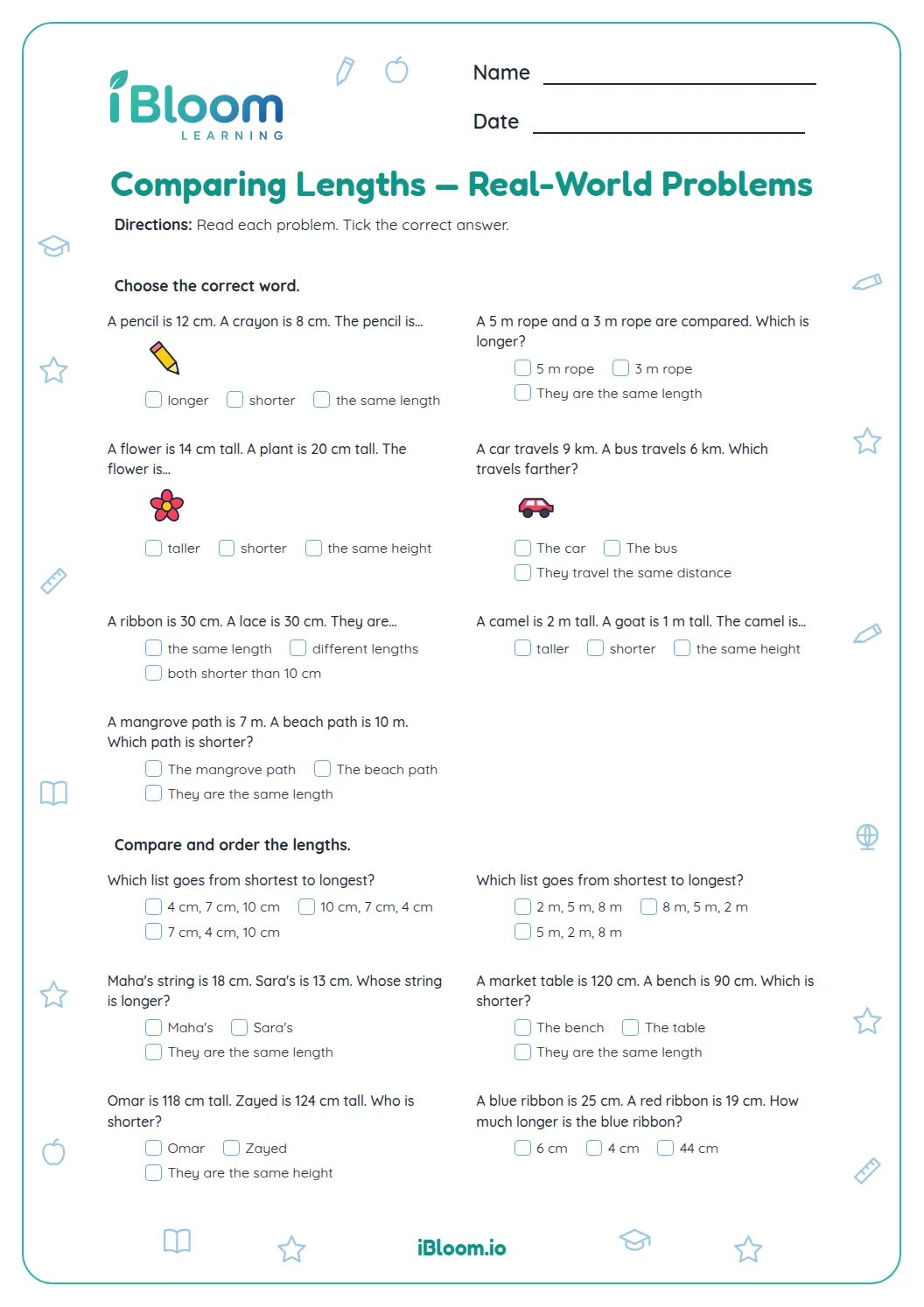
Real-World Problems for comparing lengths in Grade 1. Read each real-world comparison, then choose the correct length word or order.
Preview free PDF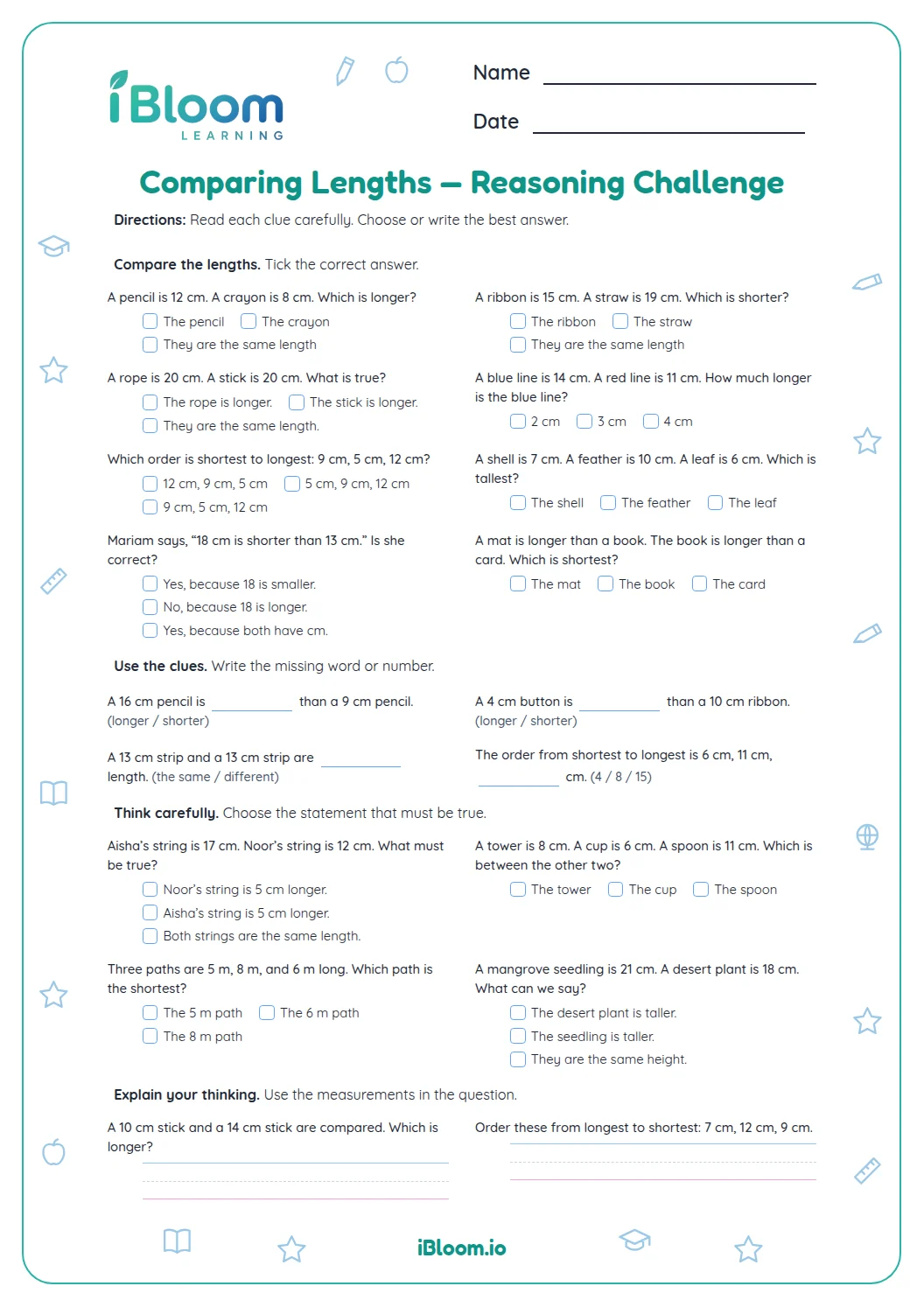
Reasoning Challenge for comparing lengths in Grade 1. Compare given lengths, order objects from shortest to longest, and choose the correct reasoning statement.
Preview free PDFPractice that builds confidence
Visual Models for comparing lengths in Grade 1. Look at visual length models, then choose longer, shorter, tallest, or shortest.
Grade 1 printable measurement activities that help children compare lengths using direct comparison, ordering, and words like longer, shorter, tallest, and shortest.
On this page, children Look at visual length models, then choose longer, shorter, tallest, or shortest..

Choose a page that matches the skill currently taught and the child's stage, from KG1 and KG2 through Grade 5.
Preview the full page first.
Check the directions, amount of reading and writing, number range, and pictures before printing.

Connect the idea to something familiar, such as a story, household object, local habitat, map, or shopping example in AED. Model one item together. Let the child try a small section independently, then ask how they reached the answer. If the task is difficult, use real objects, drawings, a word bank, or an easier related skill. End with one thing the child can explain.
Young children benefit from short sessions with talk, play, pictures, movement, and hands-on materials. A worksheet is one practice tool within a wider learning experience.

Teachers can use a page for guided practice, a learning station, homework, revision, or a quick check of understanding. Offer read-aloud support, counters, pictures, sentence starters, or fewer items when needed. Extend a task by asking learners to explain a second method, make an example, or apply the skill in a familiar UAE context. Use the child's method and mistakes to plan the next lesson.

The UAE worksheet library organises printable practice by subject, stage, and specific skill. It uses KG1, KG2, and Grade 1 to Grade 5 labels. Each published worksheet has a full-page preview so parents and teachers can check the activity before printing.
The pages aim to give children a focused chance to practise what they have already been taught. Some early-years activities use pictures and a small number of relevant emojis to make the task clear and inviting. Older learners get appropriate reading, writing, maths, and science practice. UAE examples and AED appear when they help explain the skill.
Use these pages alongside books, discussion, demonstrations, play, practical materials, investigations, and feedback. Choose a page that fits today's learning goal, help with the first example, and listen to the child's reasoning afterwards. Progress means being able to explain and apply an idea with growing independence.
Helpful answers
Grade 1 printable measurement activities that help children compare lengths using direct comparison, ordering, and words like longer, shorter, tallest, and shortest.
Yes. The full-page printable is available on this page.
The UAE library is organised for KG1, KG2, and Grade 1 through Grade 5.
Yes. Each published worksheet page shows the full printable activity.
Choose short, focused practice that supports the current lesson. Talk, play, reading and hands-on work should remain part of learning.
Yes. Offer pictures, counters, read-aloud support or fewer items while keeping the same learning goal.
No. They are practice resources to use alongside teaching and other learning activities.