Free printable practice
Factoring Practice Activities
Grade 5 factoring worksheets for factors, divisibility rules, prime numbers, prime factor trees, GCF, and LCM practice.
Explore Factoring
Free printable worksheet PDFs
Preview every available page, then download the free worksheet PDF for home, homeschool, tutoring, or classroom practice.
Preview the exact activity before downloading it.
 Divisibility Rules — Concept FoundationsConcept Foundations for divisibility rules in Grade 5. Use simple divisibility rules to decide whether numbers are divisible by 2, 3, 5, 9, or 10.Grade 5Free PDF preview
 Factoring 4 100 — Concept FoundationsConcept Foundations for factoring 4 100 in Grade 5. Identify factor pairs, then complete and list all factors for whole numbers from 4 to 100.Grade 5Free PDF preview
 Greatest Common Factor 2 100 — Concept FoundationsConcept Foundations for greatest common factor 2 100 in Grade 5. List factors, identify common factors, and find the greatest common factor for number pairs from 2 to 100.Grade 5Free PDF preview
 Greatest Common Factor 2 50 — Concept FoundationsConcept Foundations for greatest common factor 2 50 in Grade 5. Find factors, identify common factors, and complete greatest common factor statements for numbers from 2 to 50.Grade 5Free PDF preview
 Lowest Common Multiple 2 30 — Concept FoundationsConcept Foundations for lowest common multiple 2 30 in Grade 5. List multiples, identify common multiples, and find the lowest common multiple for pairs of numbers from 2 to 30.Grade 5Free PDF preview
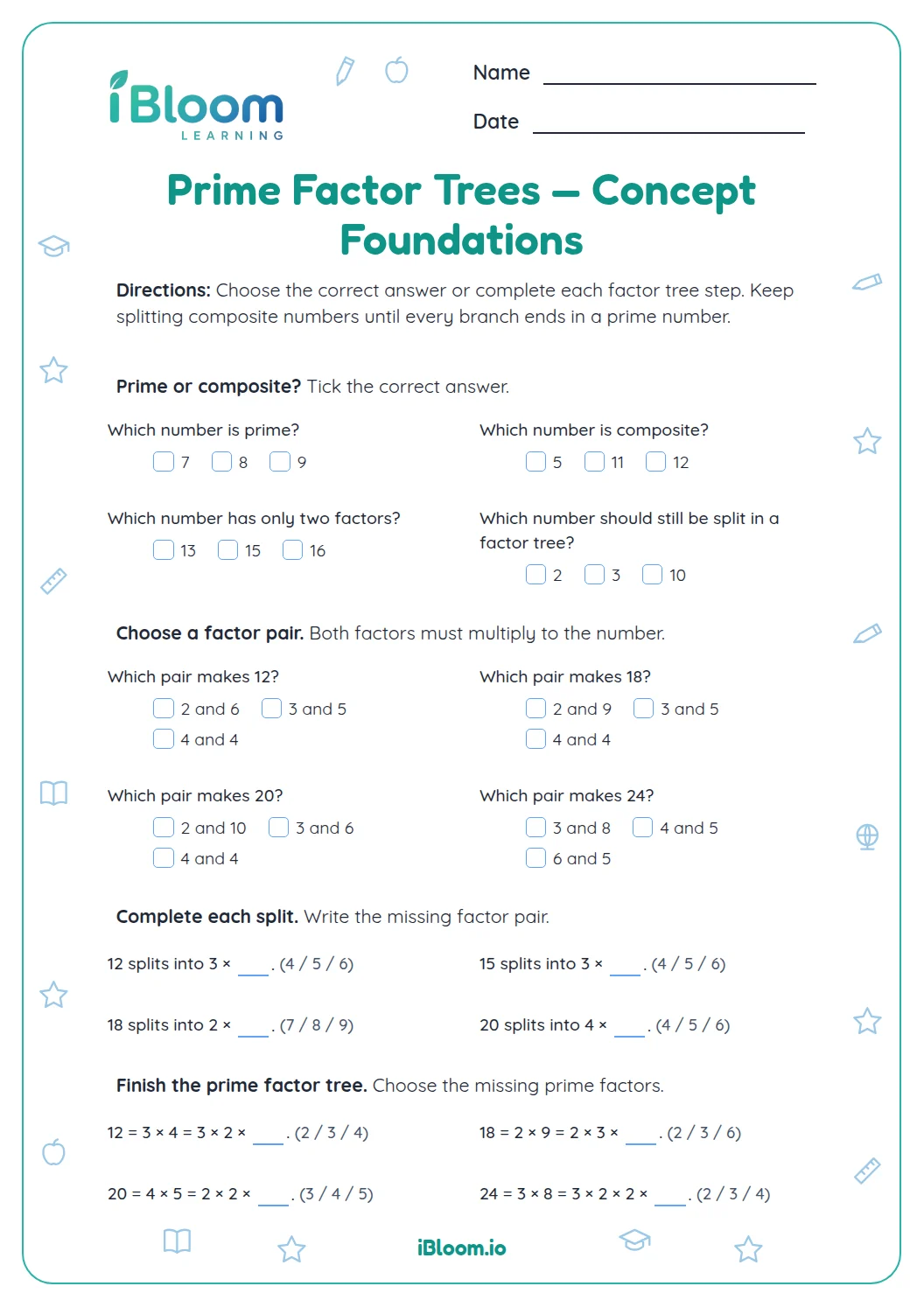 Prime Factor Trees — Concept FoundationsConcept Foundations for prime factor trees in Grade 5. Identify prime and composite numbers, choose factor pairs, and complete prime factor tree steps to write prime factors.Grade 5Free PDF preview
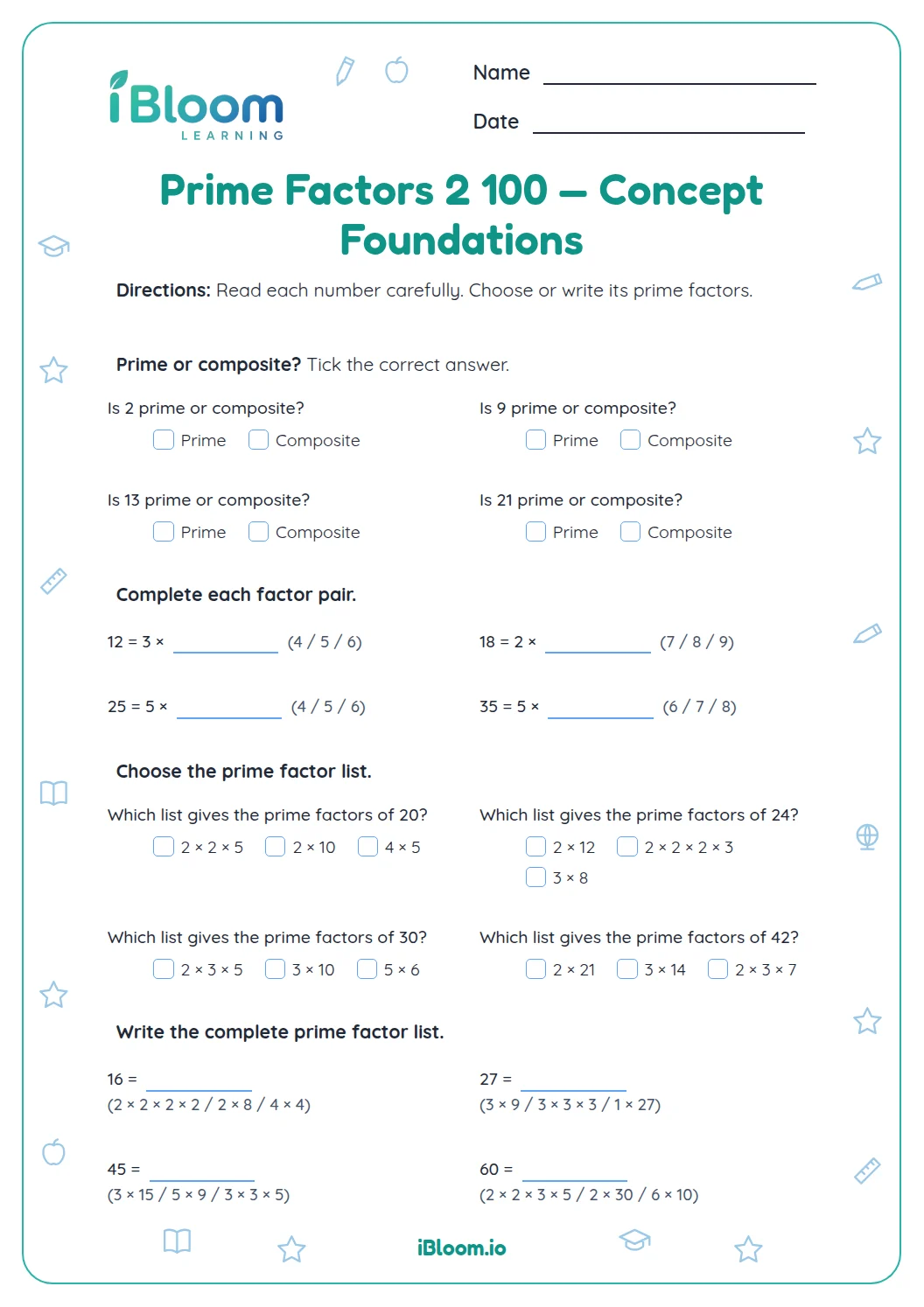 Prime Factors 2 100 — Concept FoundationsConcept Foundations for prime factors 2 100 in Grade 5. Identify prime numbers, split numbers into factors, and write prime factor lists using small numbers from 2 to 100.Grade 5Free PDF preview
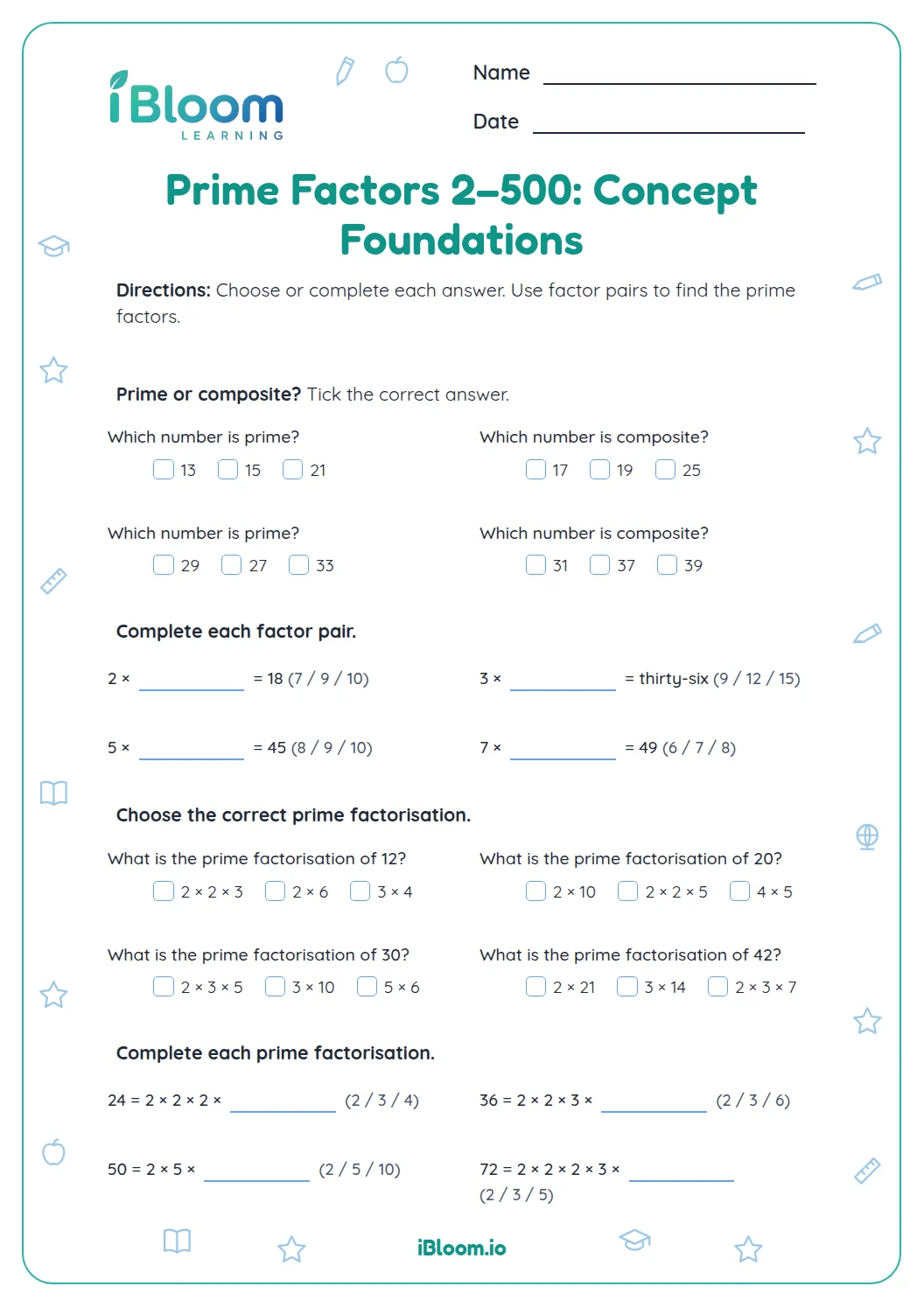 Prime Factors 2 500 — Concept FoundationsConcept Foundations for prime factors 2 500 in Grade 5. Identify prime and composite numbers, find factor pairs, and build prime factorisations for numbers from 2 to 500.Grade 5Free PDF preview
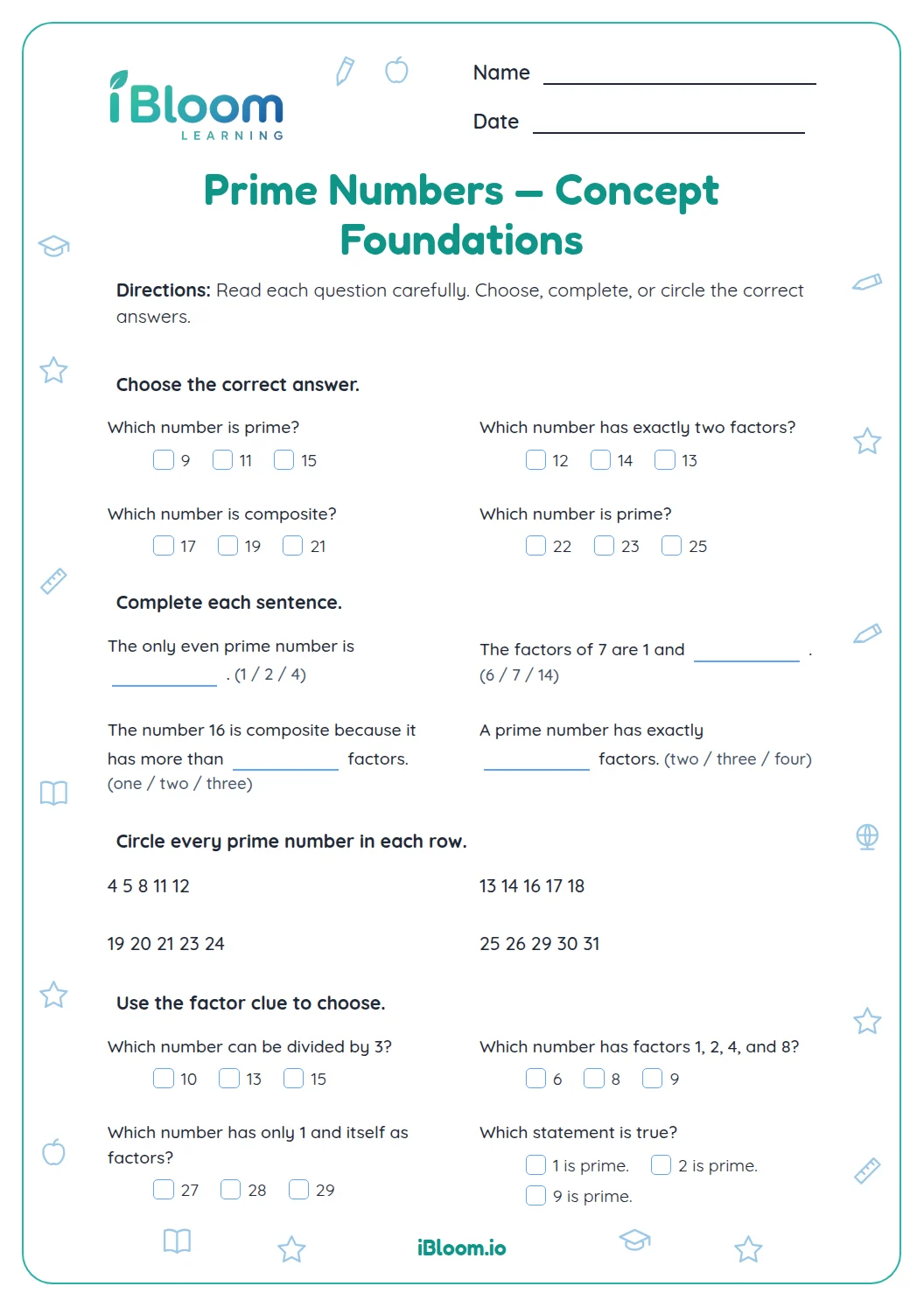 Prime Numbers — Concept FoundationsConcept Foundations for prime numbers in Grade 5. Identify prime numbers, list their factors, and use factor clues to distinguish primes from composites.Grade 5Free PDF preview
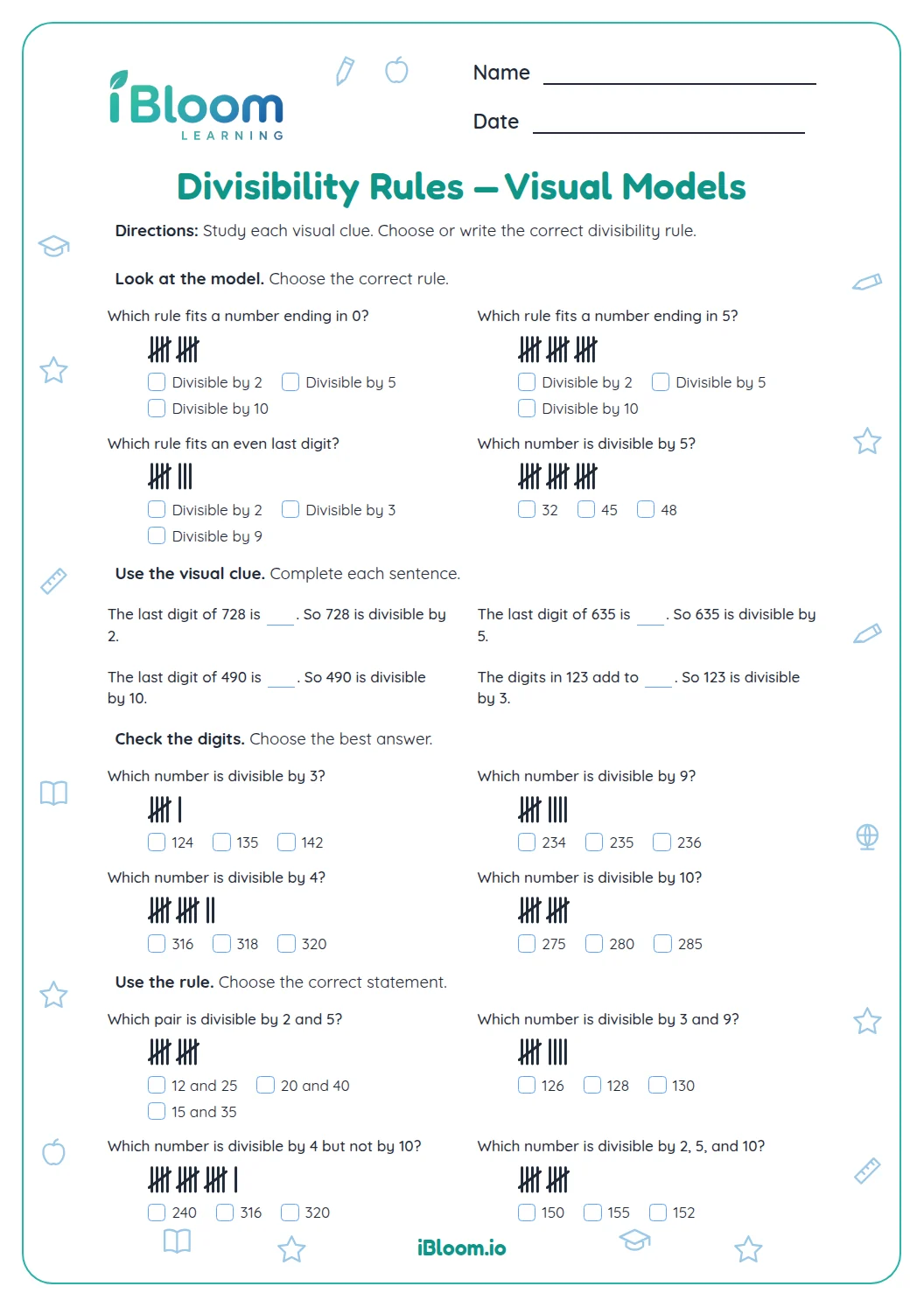 Divisibility Rules — Visual ModelsVisual Models for divisibility rules in Grade 5. Use tally and place-value clues to decide whether numbers are divisible by 2, 3, 4, 5, 9, or 10.Grade 5Free PDF preview
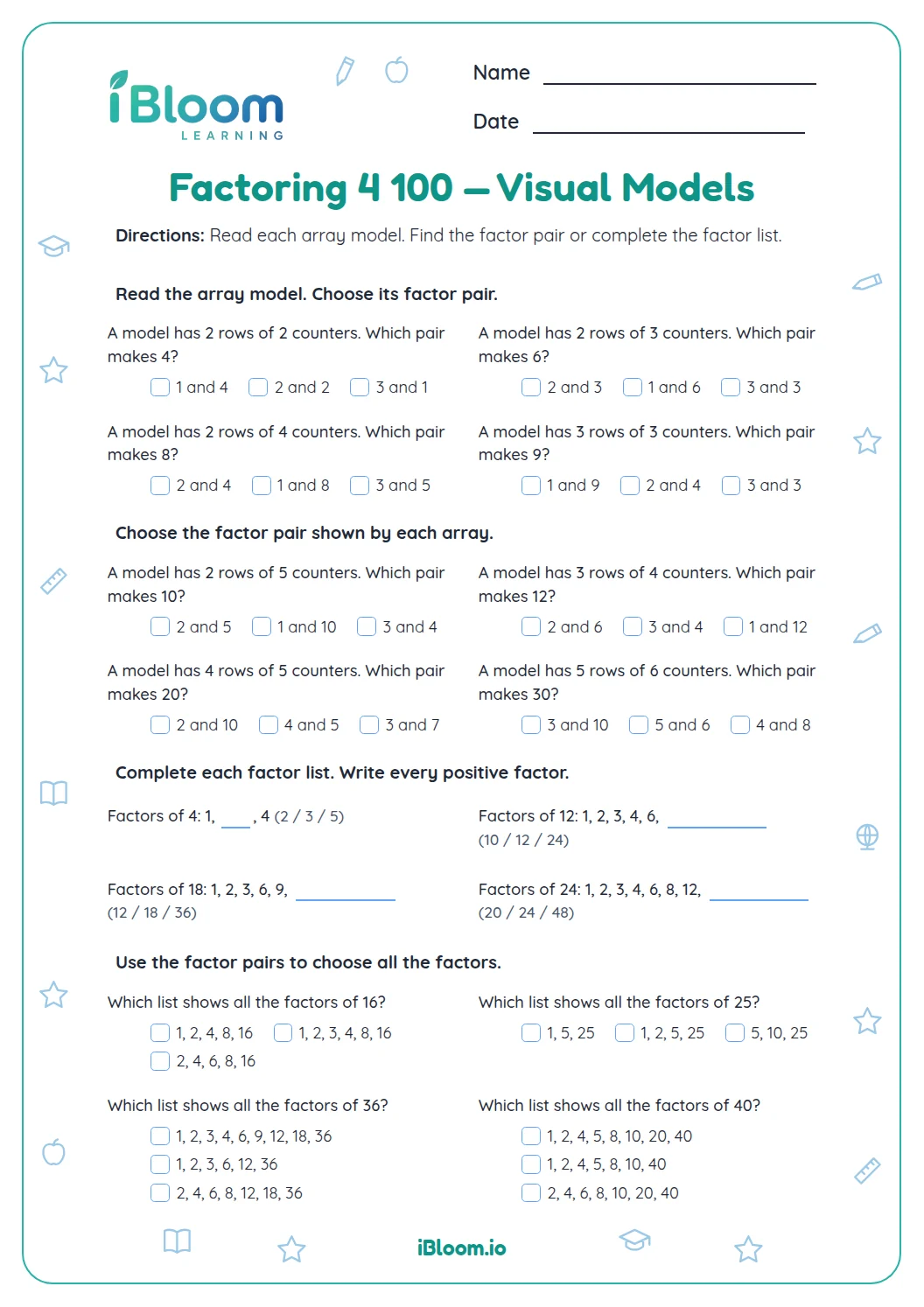 Factoring 4 100 — Visual ModelsVisual Models for factoring 4 100 in Grade 5. Use equal-row array stories to identify factor pairs, then complete factor lists for whole numbers from 4 to 100.Grade 5Free PDF preview
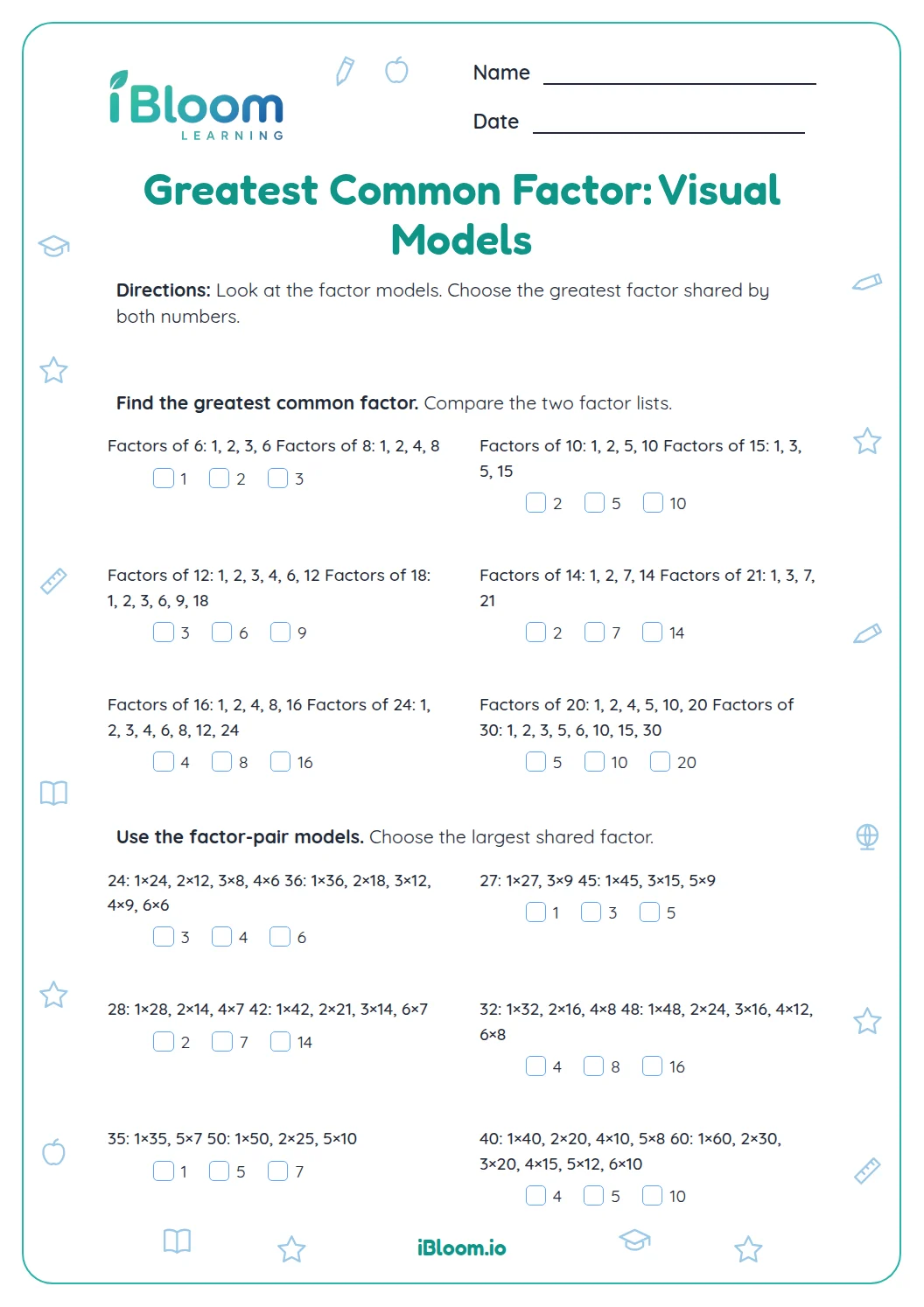 Greatest Common Factor 2 100 — Visual ModelsVisual Models for greatest common factor 2 100 in Grade 5. Compare visual factor lists and factor-pair models to identify the greatest common factor for each pair of numbers.Grade 5Free PDF preview
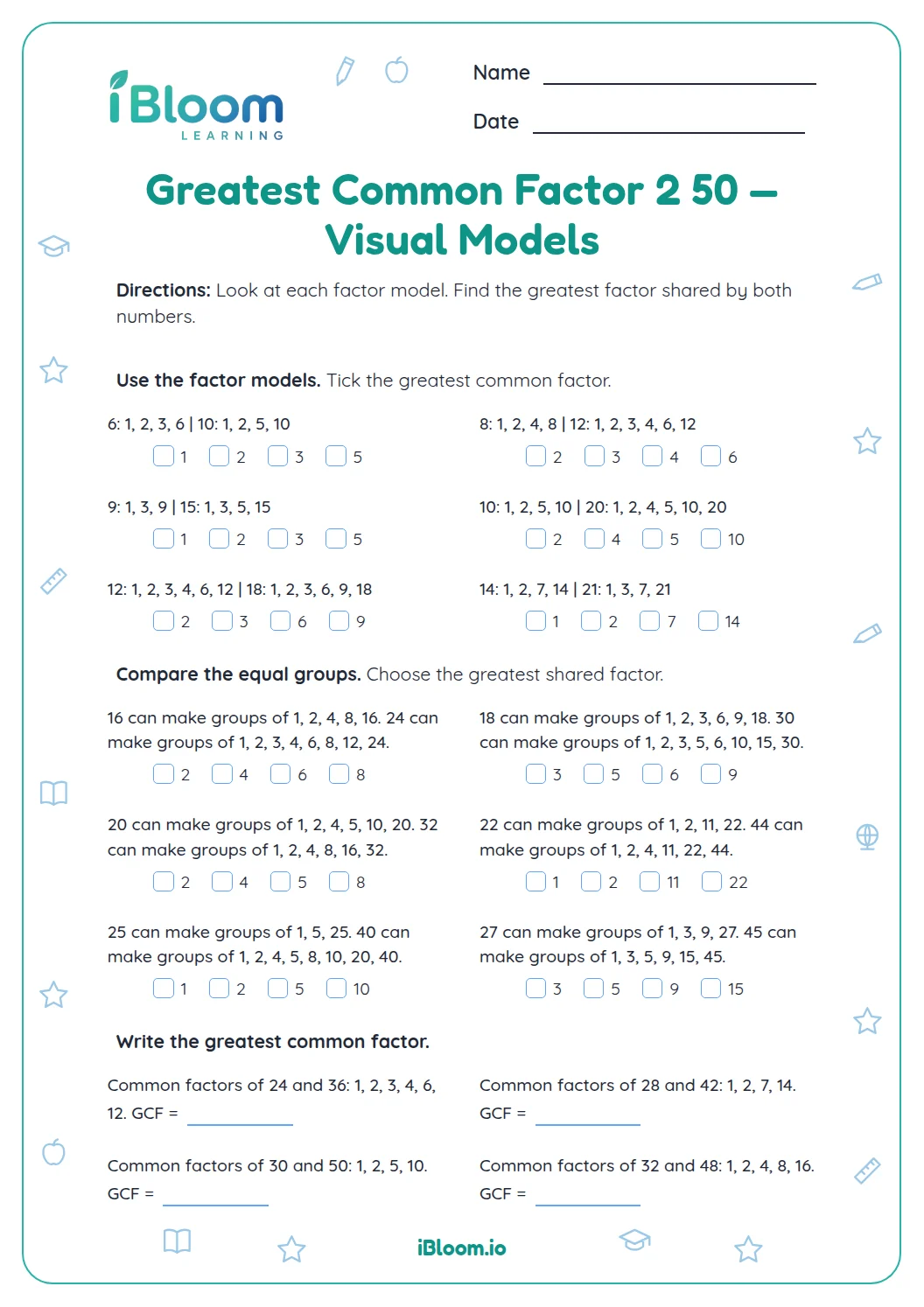 Greatest Common Factor 2 50 — Visual ModelsVisual Models for greatest common factor 2 50 in Grade 5. Study equal-group factor models, identify the shared factors, and choose or write the greatest common factor for each pair.Grade 5Free PDF preview
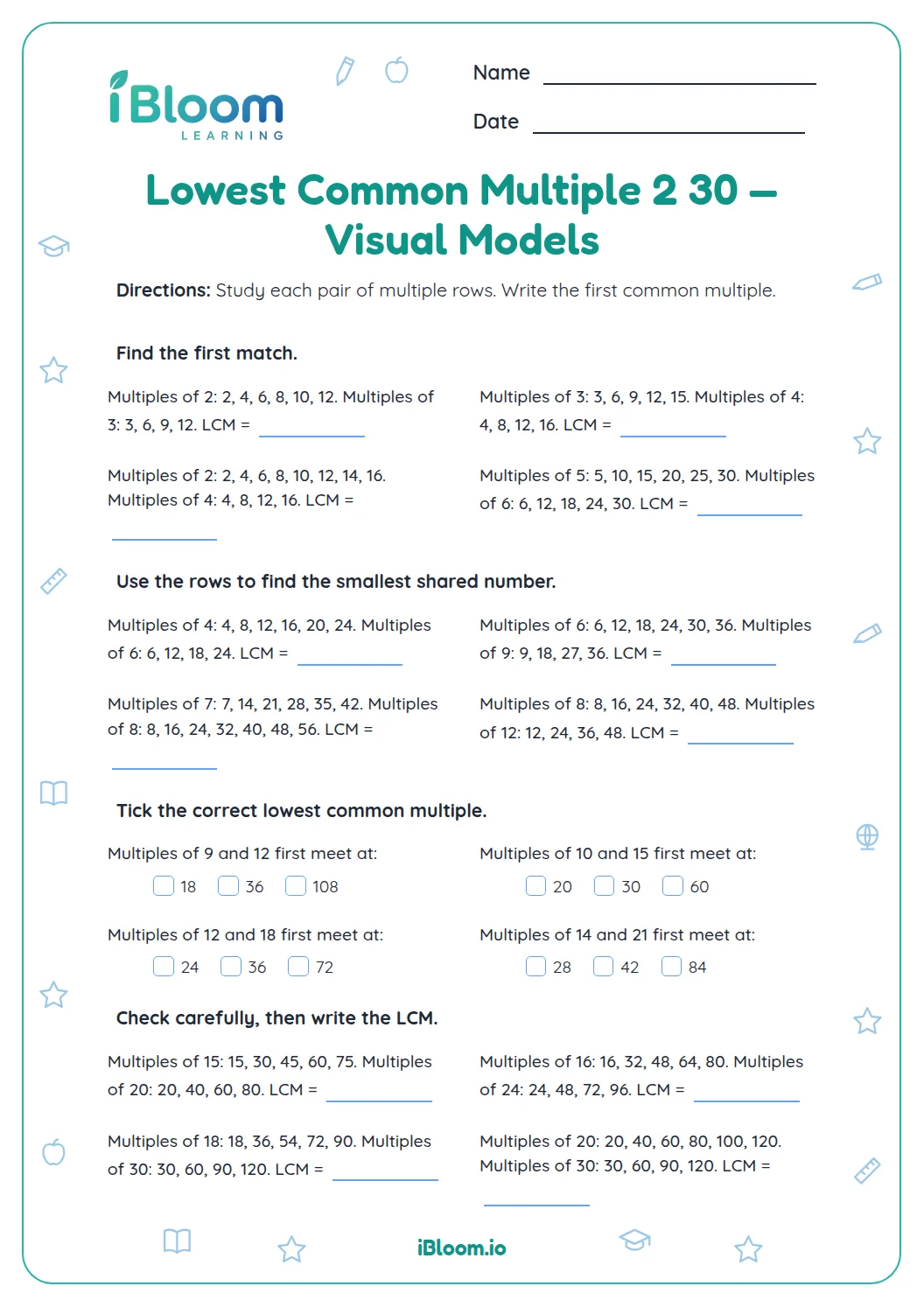 Lowest Common Multiple 2 30 — Visual ModelsVisual Models for lowest common multiple 2 30 in Grade 5. Find each lowest common multiple by comparing two organised rows of multiples and writing the first match.Grade 5Free PDF preview
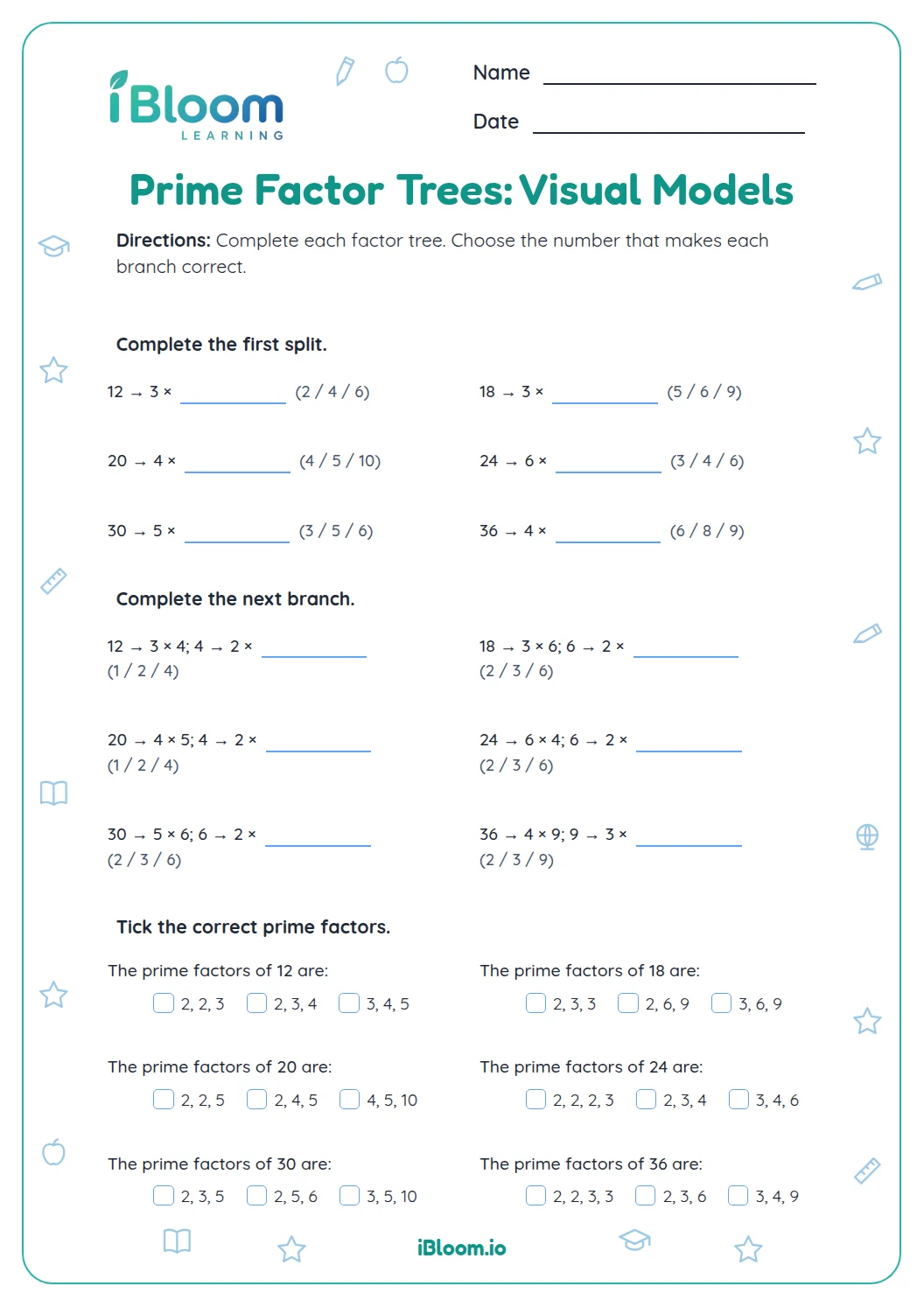 Prime Factor Trees — Visual ModelsVisual Models for prime factor trees in Grade 5. Complete missing numbers in simple prime factor tree branches, then identify the prime factors.Grade 5Free PDF preview
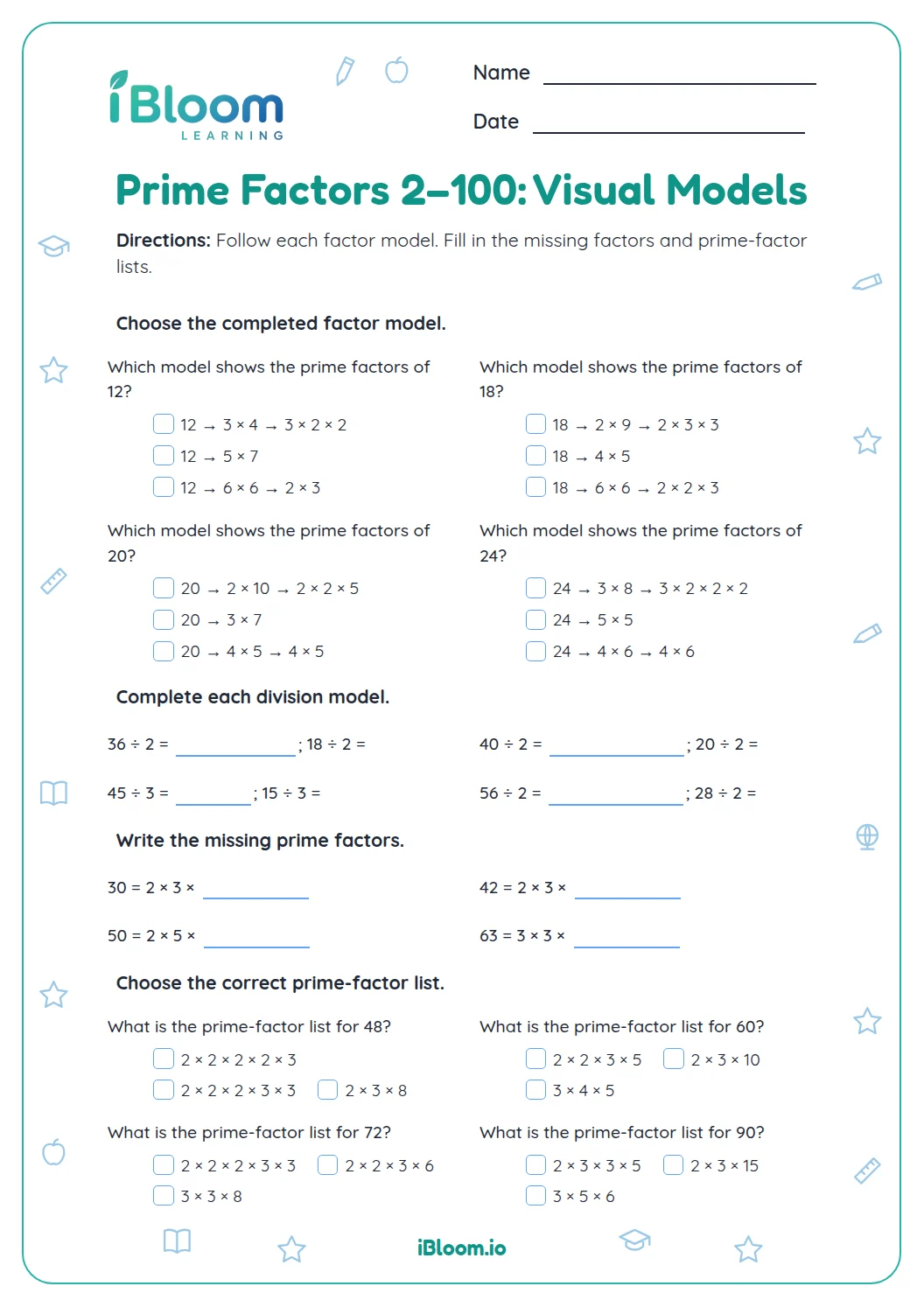 Prime Factors 2 100 — Visual ModelsVisual Models for prime factors 2 100 in Grade 5. Complete factor-tree models, choose correct prime-factor paths, and write prime factor lists for numbers from 2 to 100.Grade 5Free PDF preview
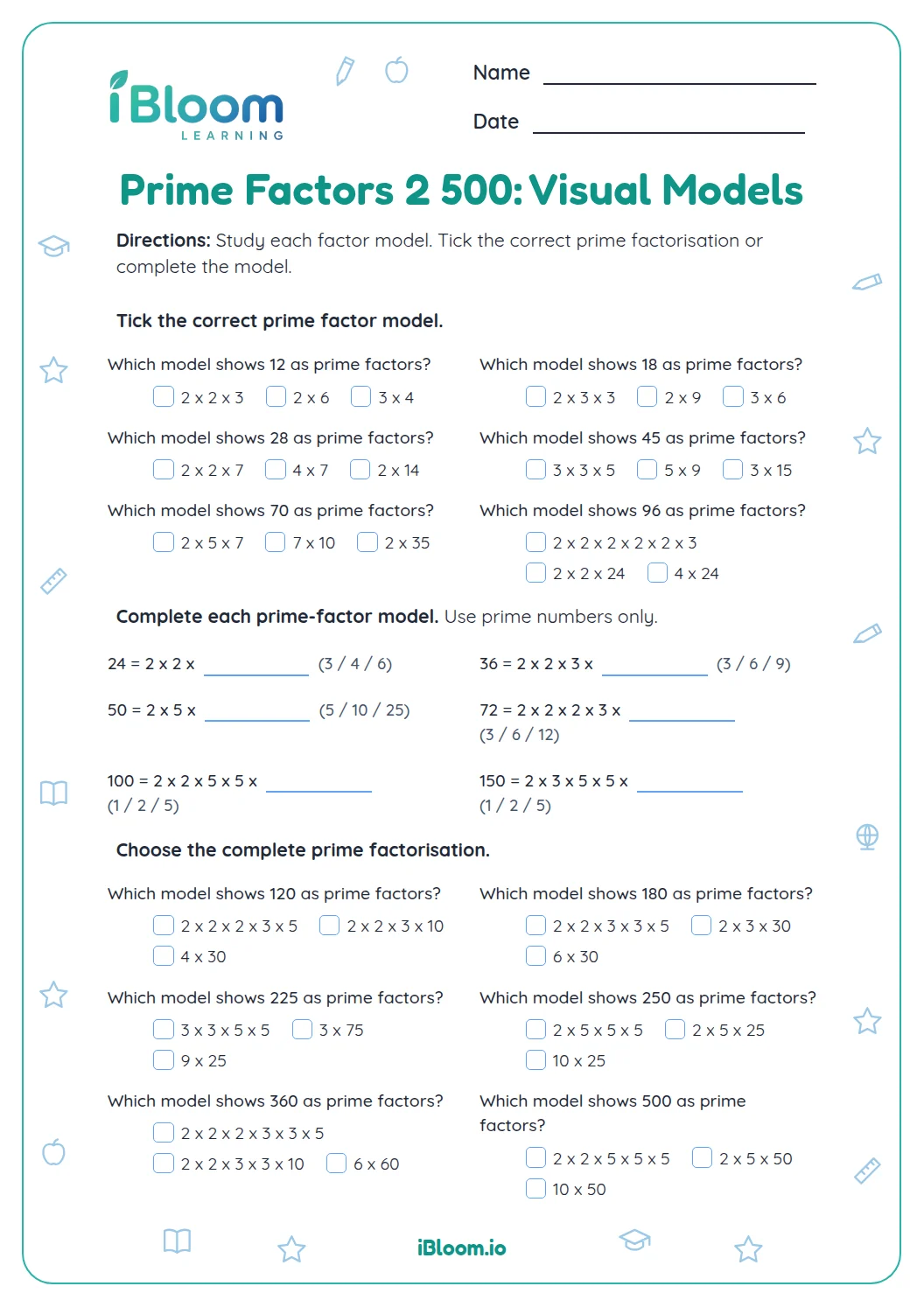 Prime Factors 2 500 — Visual ModelsVisual Models for prime factors 2 500 in Grade 5. Use factor-model choices and completed multiplication chains to practise writing numbers from 2 to 500 as prime factors.Grade 5Free PDF preview
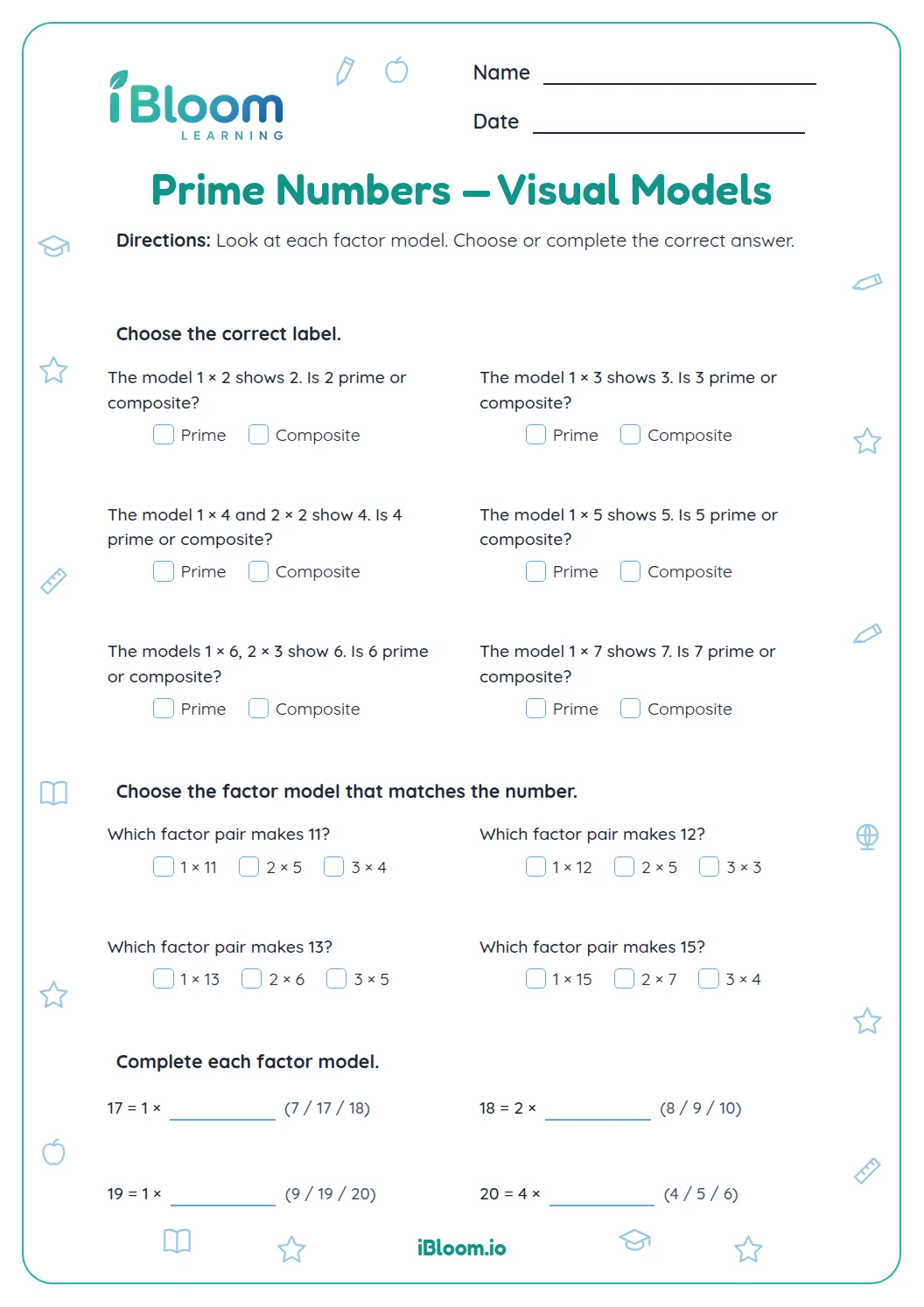 Prime Numbers — Visual ModelsVisual Models for prime numbers in Grade 5. Use factor-pair arrays and divisibility clues to decide whether each number is prime or composite.Grade 5Free PDF preview
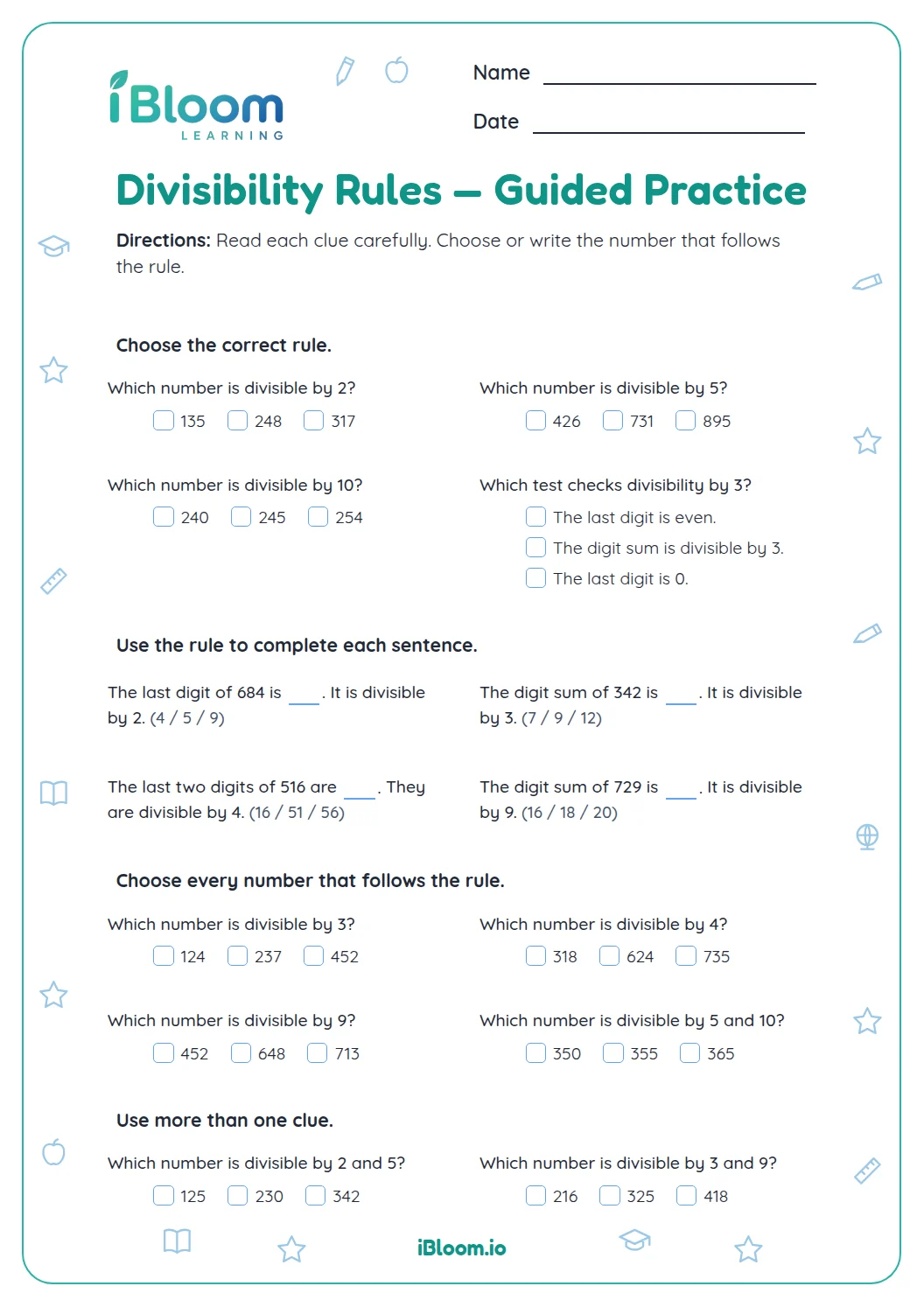 Divisibility Rules — Guided PracticeGuided Practice for divisibility rules in Grade 5. Use guided examples to identify divisibility rules, test numbers, and choose numbers divisible by given divisors.Grade 5Free PDF preview
 Factoring 4 100 — Guided PracticeGuided Practice for factoring 4 100 in Grade 5. Choose factor pairs, complete missing factors, and list all factors for whole numbers from 4 to 100.Grade 5Free PDF preview
Practice that builds confidence
Practise Factoring
Grade 5 factoring worksheets for factors, divisibility rules, prime numbers, prime factor trees, GCF, and LCM practice.
Grade 5 factoring worksheets for factors, divisibility rules, prime numbers, prime factor trees, GCF, and LCM practice.
Explore printable factoring worksheets for UAE learners. Choose a focused activity that suits the child's stage, model the first example together, and discuss how the child found the answer.

Using a worksheet well
Begin with a short explanation and one worked example. Let the child complete a manageable section, then ask them to explain their answer or show another method. For younger learners, pair the page with real objects, pictures, talk and play. If an item is difficult, return to the prerequisite skill and try again later.
Helpful answers
Frequently asked questions
How should I use these worksheets?
Choose a page that matches the current skill, model one example, and discuss the answers together.
Can I print a worksheet?
Yes. Open a published activity to preview its full printable page before printing.