
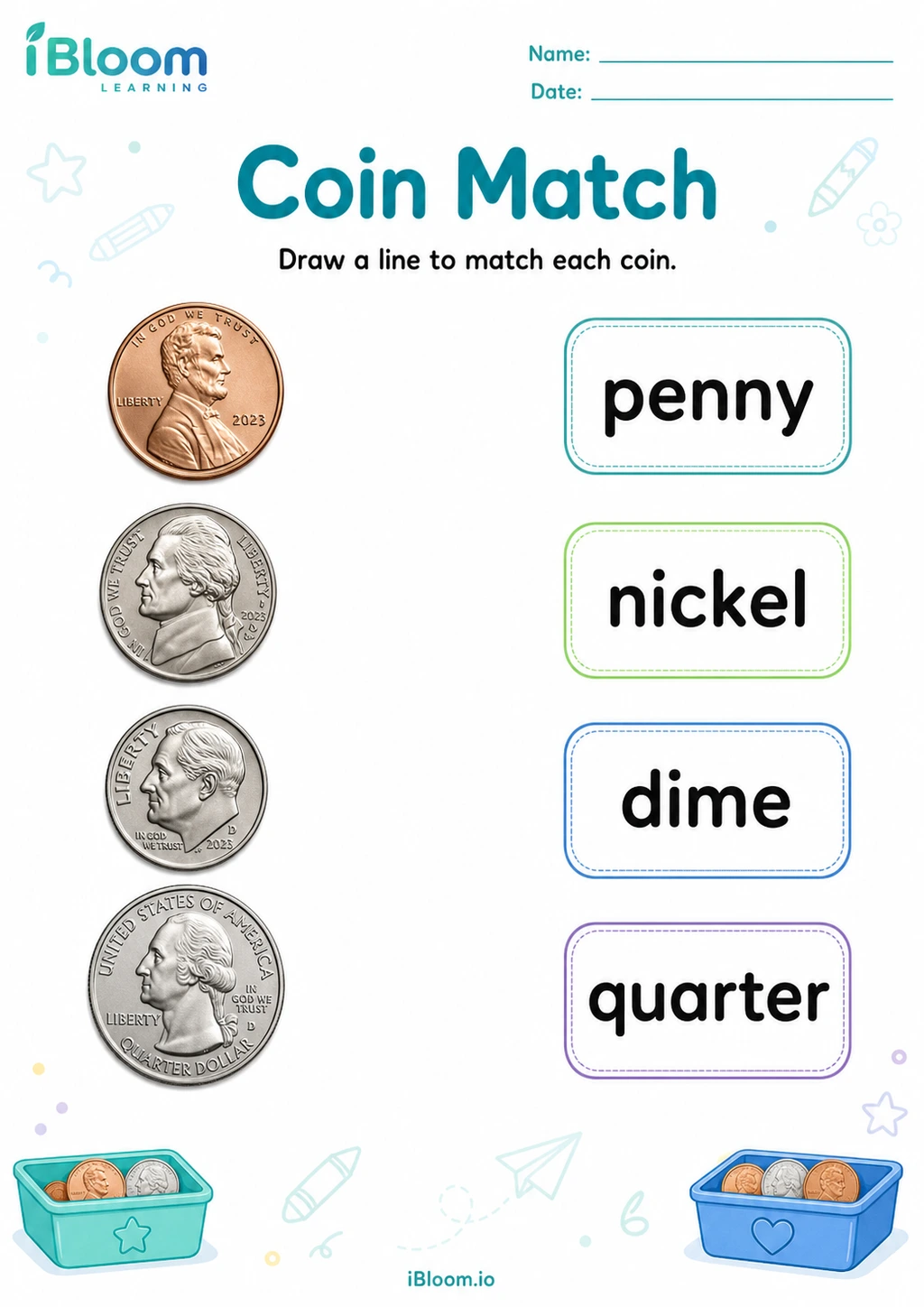
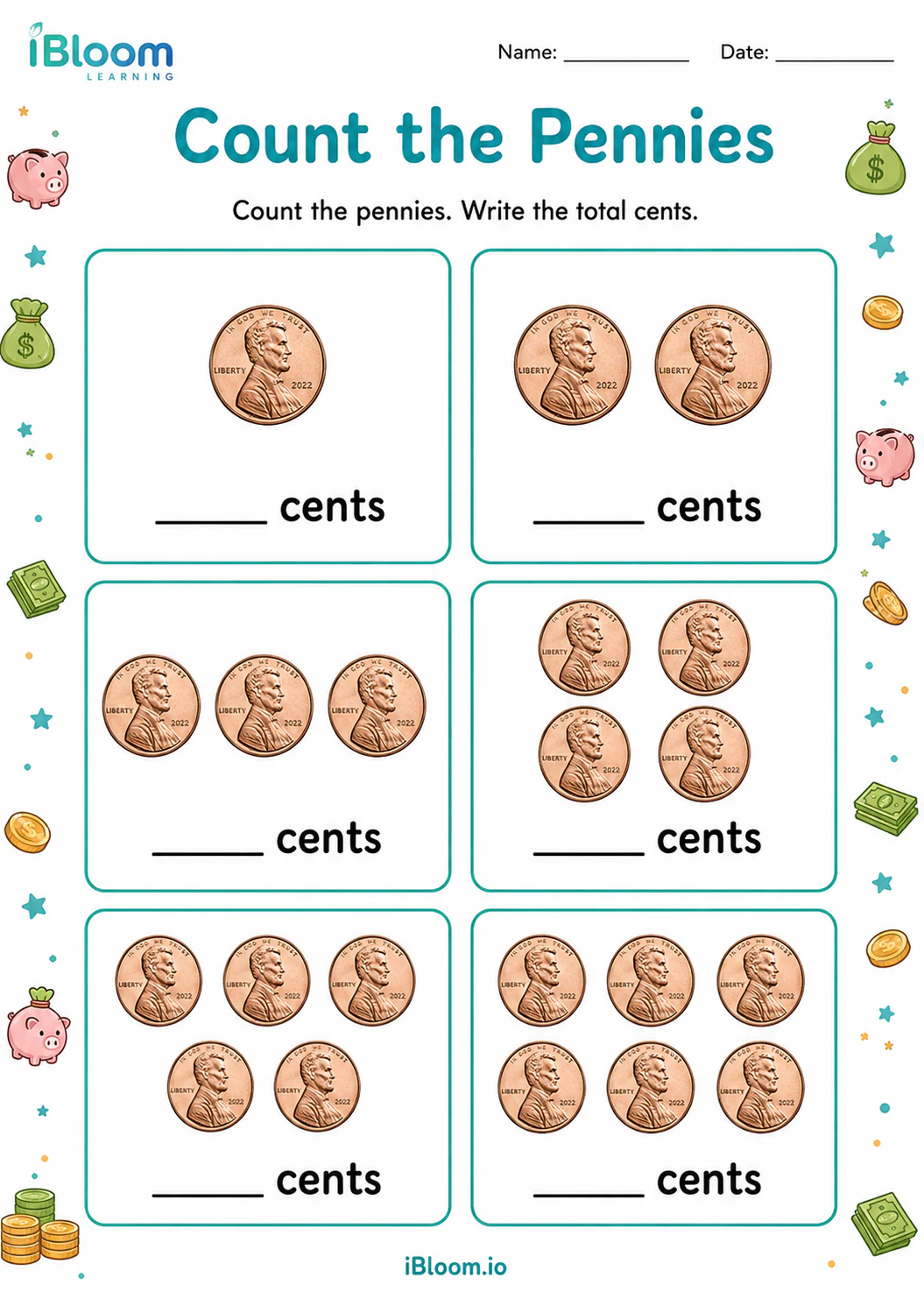
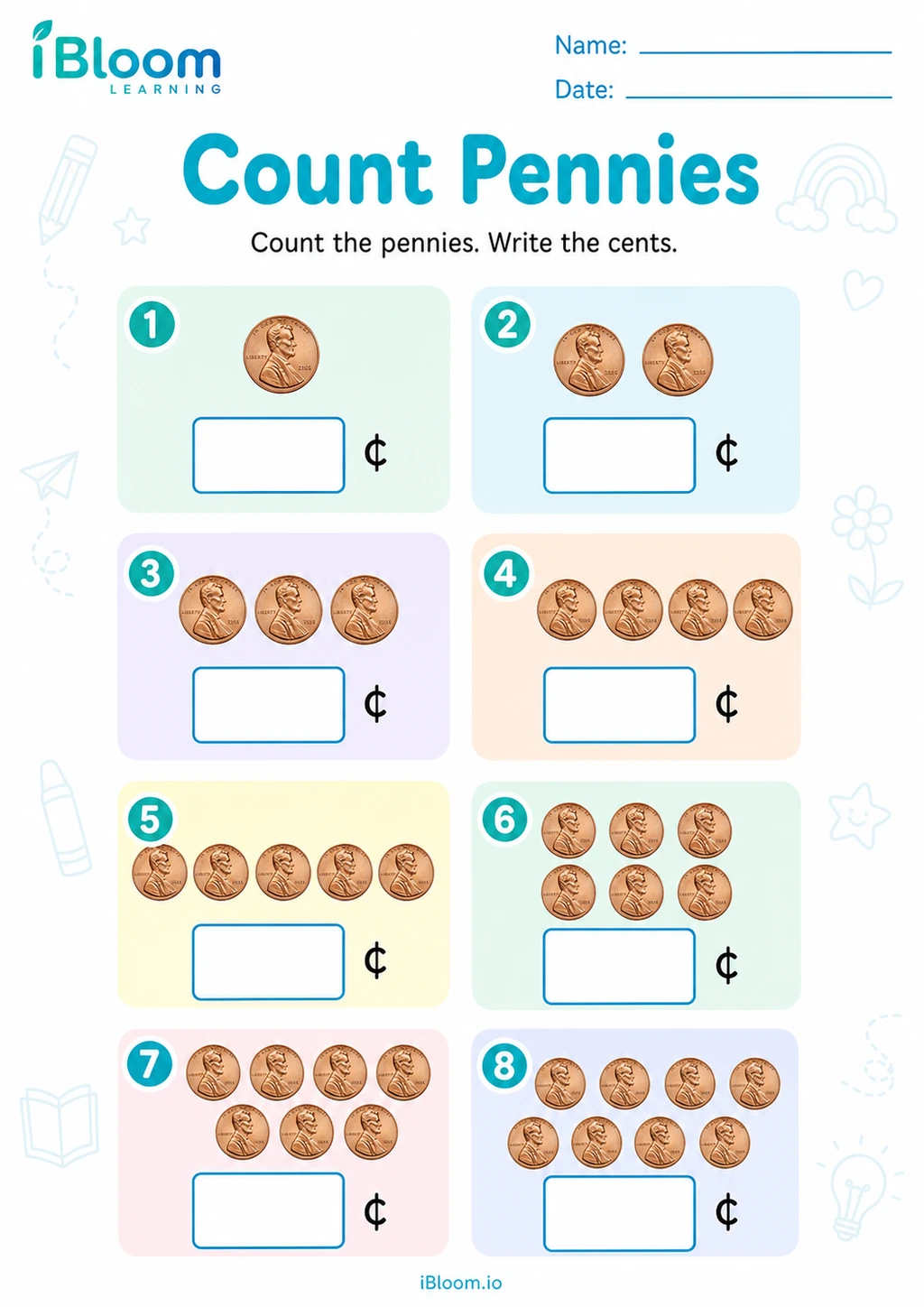

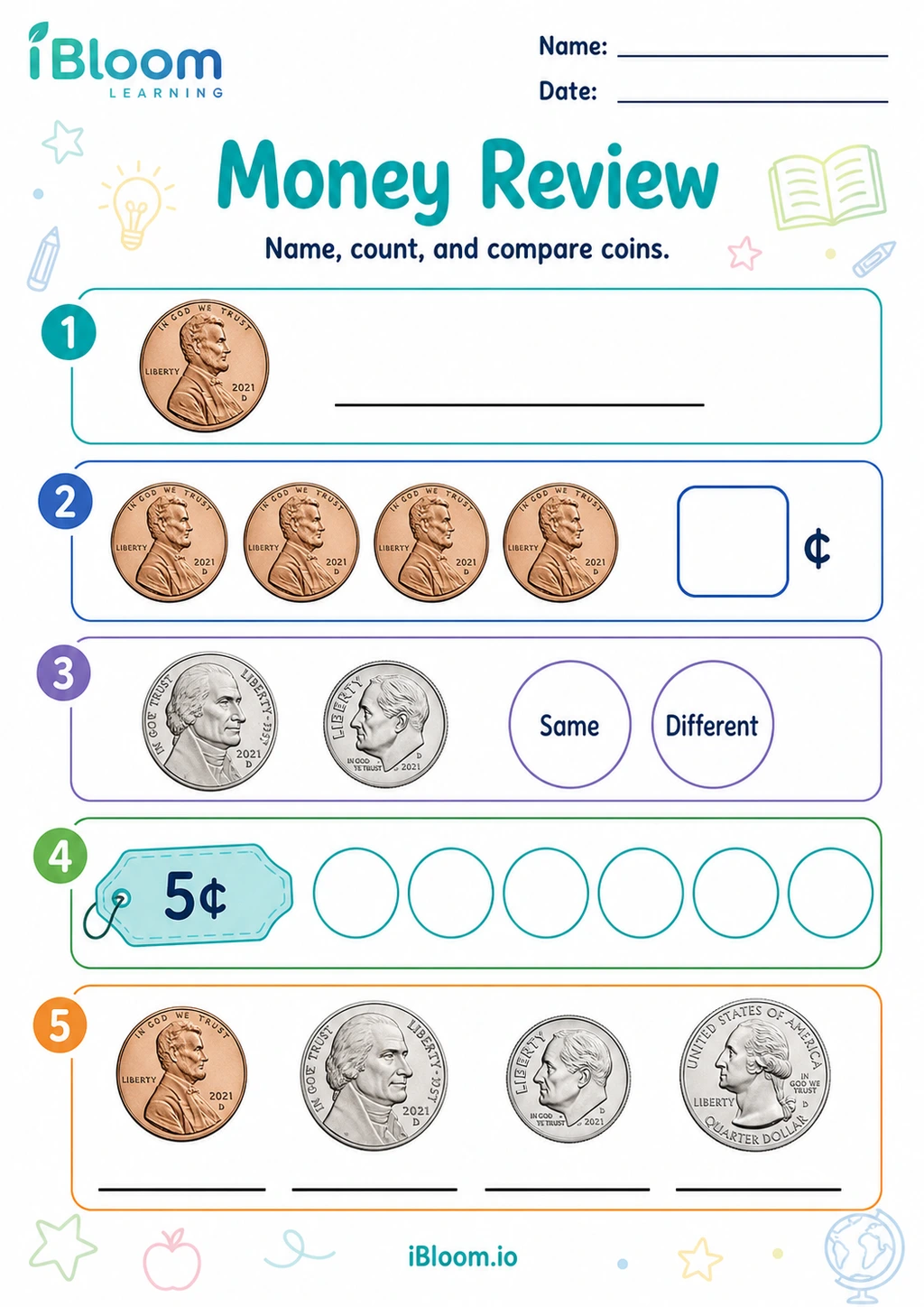


About this worksheet
This Kindergarten printable has 14 pictured comparisons using pennies, nickels, dimes, and quarters. In the first part, children compare two coins; in the second, they decide whether a pictured group contains one coin kind or more than one. The task is to notice coin type, not to calculate value. A separate answer key identifies each same-kind or mixed-kind group. The worksheet replaces the original eight two-coin items with a longer practice set and coin groups.
What makes two coins the same kind?
Coins of the same kind share a familiar design and size. Compare the coin faces rather than counting how many cents the coins are worth.
How can I compare a small group?
Look at every coin in the picture. If each coin has the same type, circle Same; if one differs, circle Different.
- 1q2 shows a nickel and a dime.
- 2The coins have different names.
- 3Answer: Different.
What should I notice in Part B?
Part B has groups of three or four coins. Check every coin before answering; one different coin makes the group Different.
Compare coin kinds
- 1Look at the first coin and name its kind if you can.
- 2Compare its face and size with the other coin or coins.
- 3Check every coin in a group.
- 4Circle Same when all coins match; circle Different when any coin differs.
- 5Use the key to review coin names, not coin values.
Coin comparison slips
The mistake
Choosing Same because two coins have the same color.
The fix
Compare the coin faces and sizes as well as color.
The mistake
Looking at only two coins in a group of three or four.
The fix
Scan each coin before deciding whether all match.
The mistake
Thinking a group is Different because the coins have different values.
The fix
Different means different coin kinds; groups of the same kind stay Same.
What to practice next
Make more practice
Questions parents and teachers ask
Which coins are pictured?
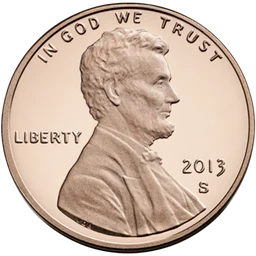
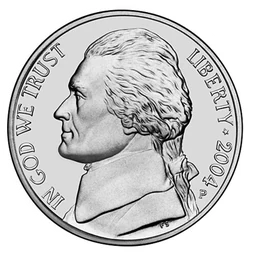
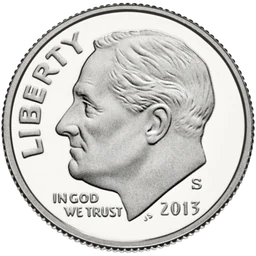
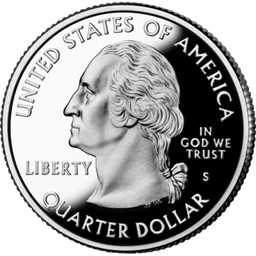
Pictured US coins include pennies, nickels, dimes, and quarters. Children identify whether the kinds match by comparing recognizable faces and relative coin sizes. The coin names can be said aloud as children look. A penny has a copper color, while nickels, dimes, and quarters are silver-colored in the pictures. Relative size and the coin face provide additional clues.
What grade is this activity for?
The worksheet is intended for Kindergarten. Adults may name each pictured coin with the child, then ask whether all coins in a pair or group are the same kind. Naming the coins together can make the comparison concrete. Ask the child to point to each coin and say its name before choosing an answer.
How many comparisons are there?
The page has 14 questions. Seven compare pairs, and seven compare groups containing three or four coins. Children circle Same or Different for every item and inspect every coin. Some groups contain several matching coins; others mix types. For a group comparison, check each pictured coin rather than deciding from the first two alone.
Does the worksheet teach coin values?
This activity practices recognizing coin kinds by sight rather than adding values. A group is Same when every coin is the same type, even if several coins appear. A group of three pennies is Same because every coin is a penny. A group with a penny and nickel is Different because the types do not match.
Is an answer key included?
Yes. The answer key marks every pictured pair and group. Ask the child to point to a coin that differs when the answer is Different, then name its type. The key helps adults review the classifications quickly. For a Different answer, ask the child to identify both coin types shown in the group.